
Six Acclaimed Productions Conclude,
Igniting Continued Passion for Cultural Exchange
Adapted and translated from a post on the WeChat Official Account of The Central Academy of Drama (https://mp.weixin.qq.com/s/SDAXiHlayGhGhuLSSBBqPw)
From October 20 to 22, six remarkable theatrical productions were staged at the Theatre Centre on the Changping Campus of the Central Academy of Drama (CAD) as part of the WTEA International Theatre Festival 2025. Despite the brevity of the three-day event, the vibrant exchange of ideas spurred creative dialogue among students and teachers from around the world, allowing participants to experience the visceral, soul-stirring power of theatre.
.20251110144117.png)
Posters of the 6 productions
At the end of the festival, two productions were honored with the WTEA Stage Performance Award, while six performers received the WTEA Acting Award and another six were presented with the Outstanding Acting Award. The award ceremony took place on the afternoon of October 24, 2025, at the Guangxi Provincial Art Museum, constituting a highlight of the Guilin Festival's opening ceremony.
Winners of the WTEA Stage Performance Award:
1. Orpheus & Eurydice, by the Athens Conservatoire Drama School, Greece
2. Zhuangzi’s Dream, by the Central Academy of Drama, China
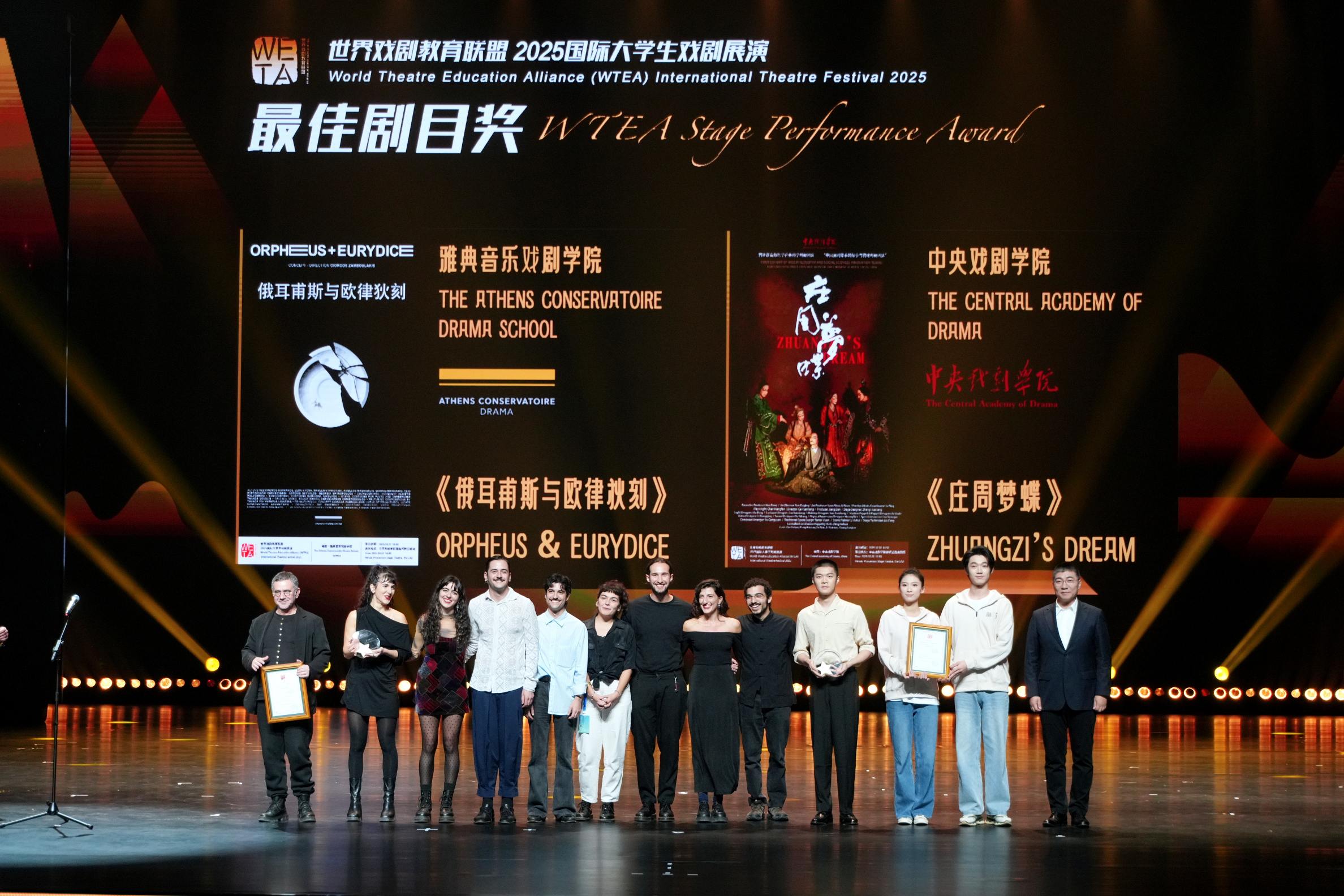
Winners of the WTEA Stage Performance Award
Winners of the acting awards:
1. The Central Academy of Drama, China
WTEA Acting Award: Li Yuxuan
Outstanding Acting Award: Peng Haoran
2. Shota Rustaveli Theatre and Film Georgia State University, Georgia
WTEA Acting Award: Mariam Gabadze
Outstanding Acting Award: Irakli Lomidze
3. The Athens Conservatoire Drama School, Greece
WTEA Acting Award: Angelos Magnisalis
Outstanding Acting Award: Georgia Spyropoulou
4. Russian Institute of Theatre Arts -GITIS, Russia
WTEA Acting Award: Dmitrii Gavrilov
Outstanding Acting Award: Svetlana Kharitonova
5. Oklahoma City University School of Theatre, the US
WTEA Acting Award: Maddy Grimes
Outstanding Acting Award: Maleah Minyard
6. London Academy of Music & Dramatic Art, the UK
WTEA Acting Award: Dana Gough
Outstanding Acting Award: Austin Evans

Winners of the WTEA Acting Award
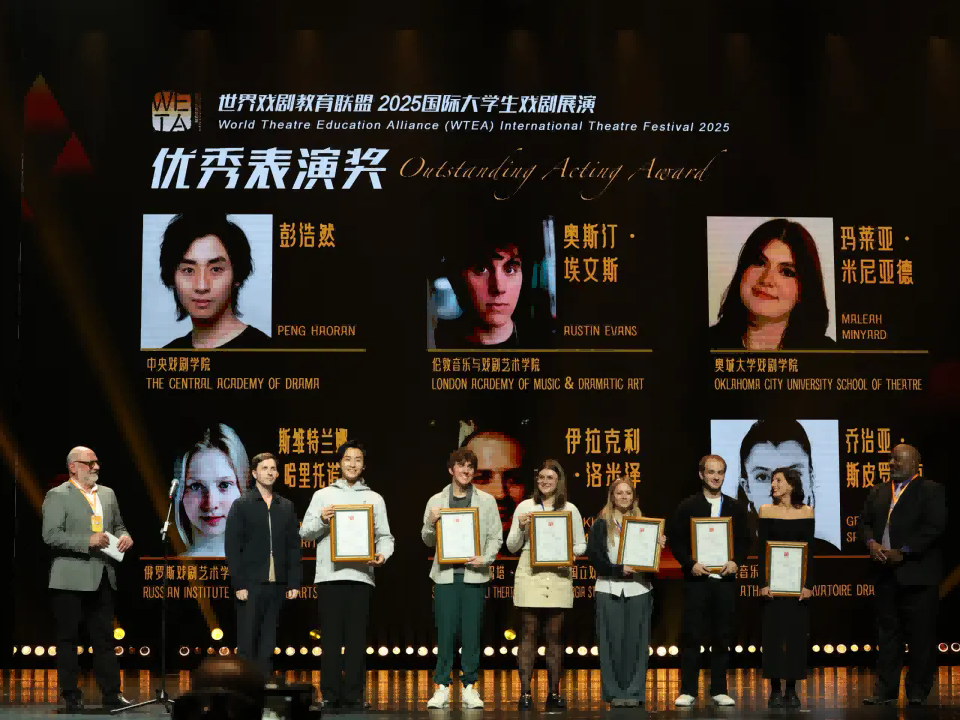
Winners of the Outstanding Acting Award
The six productions feature various styles and techniques of expression, sharing the participants’ insights into “Love” and “Dream” through the young eyes. With genuine performance, they are telling the stories of our times. Here, cultural sparks fly as arts from around the world engage in dialogue and mingle under the common themes.
01 Zhuangzi's Dream
By the Central Academy of Drama, China
On the afternoon of October 20, the Central Academy of Drama presented Zhuangzi's Dream at the Proscenium Stage Theatre of its Changping Campus Theatre Centre. Rooted in the philosophical spirit of Zhuangzi, the production reconstructs the absurd allegory of Zhuang Zhou Tests His Wife, re-interpreting the low-ranking Lacquer Garden official in the twilight of the Warring States period as a man ensnared by obsession and transcendence, reality and illusion.
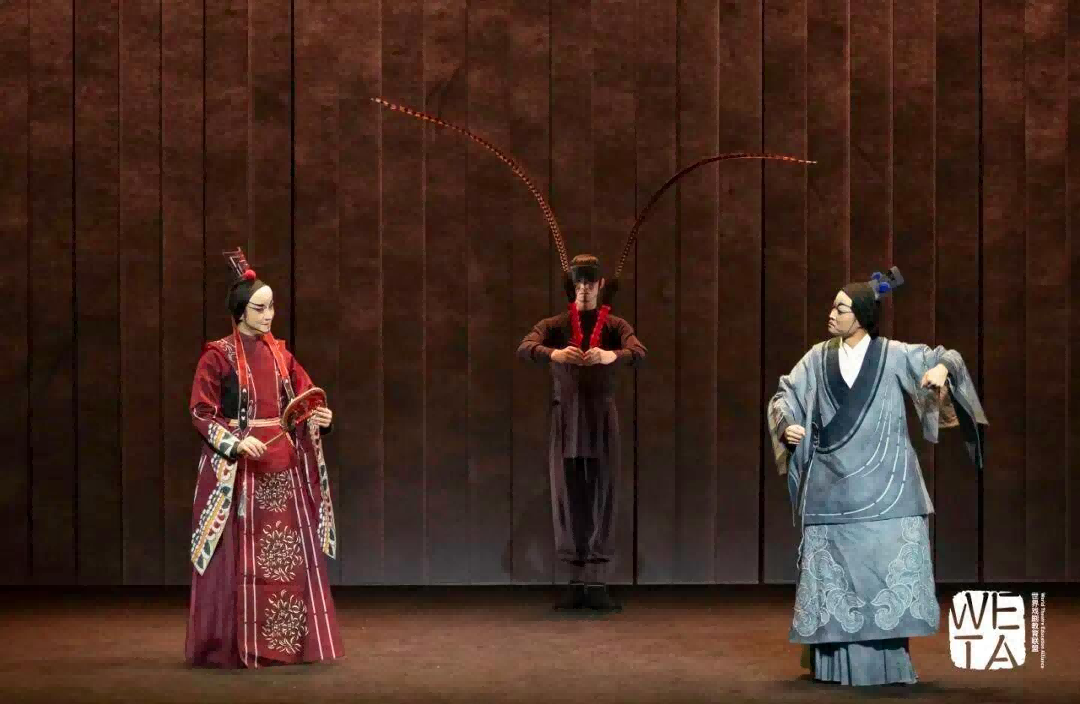
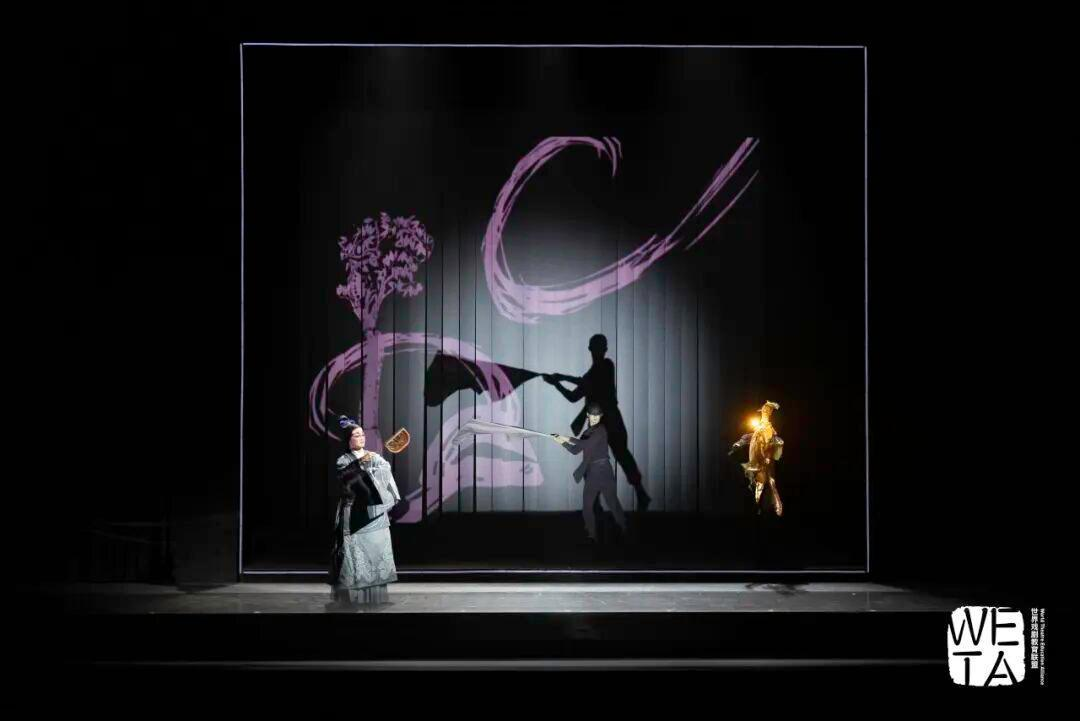
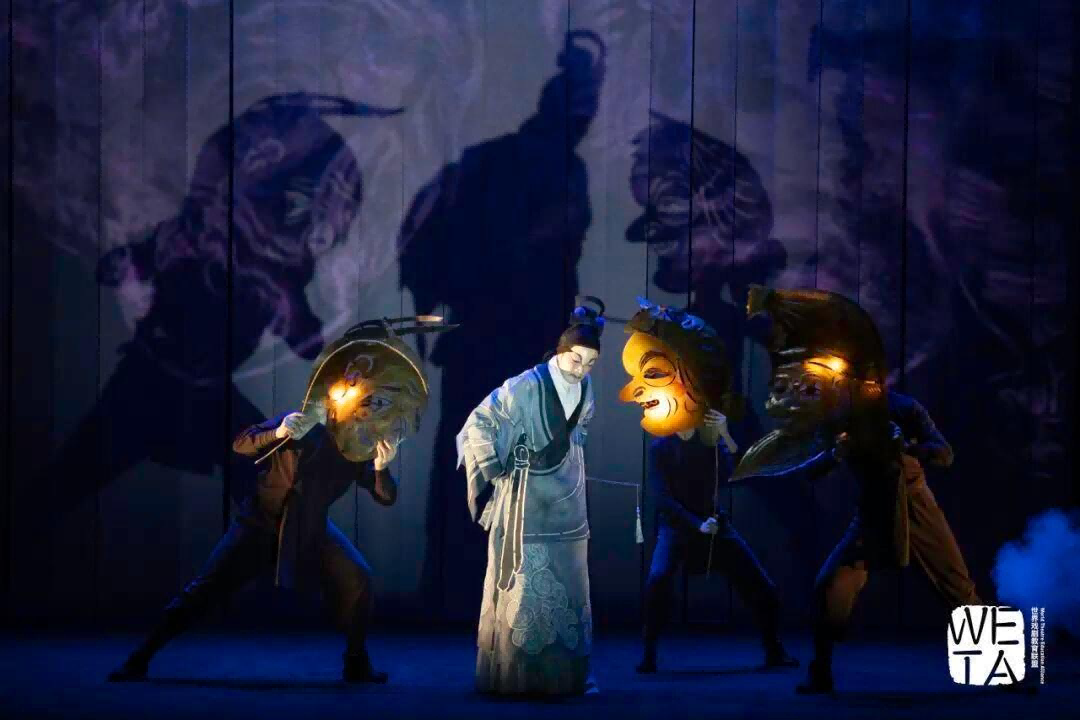
Stage Stills
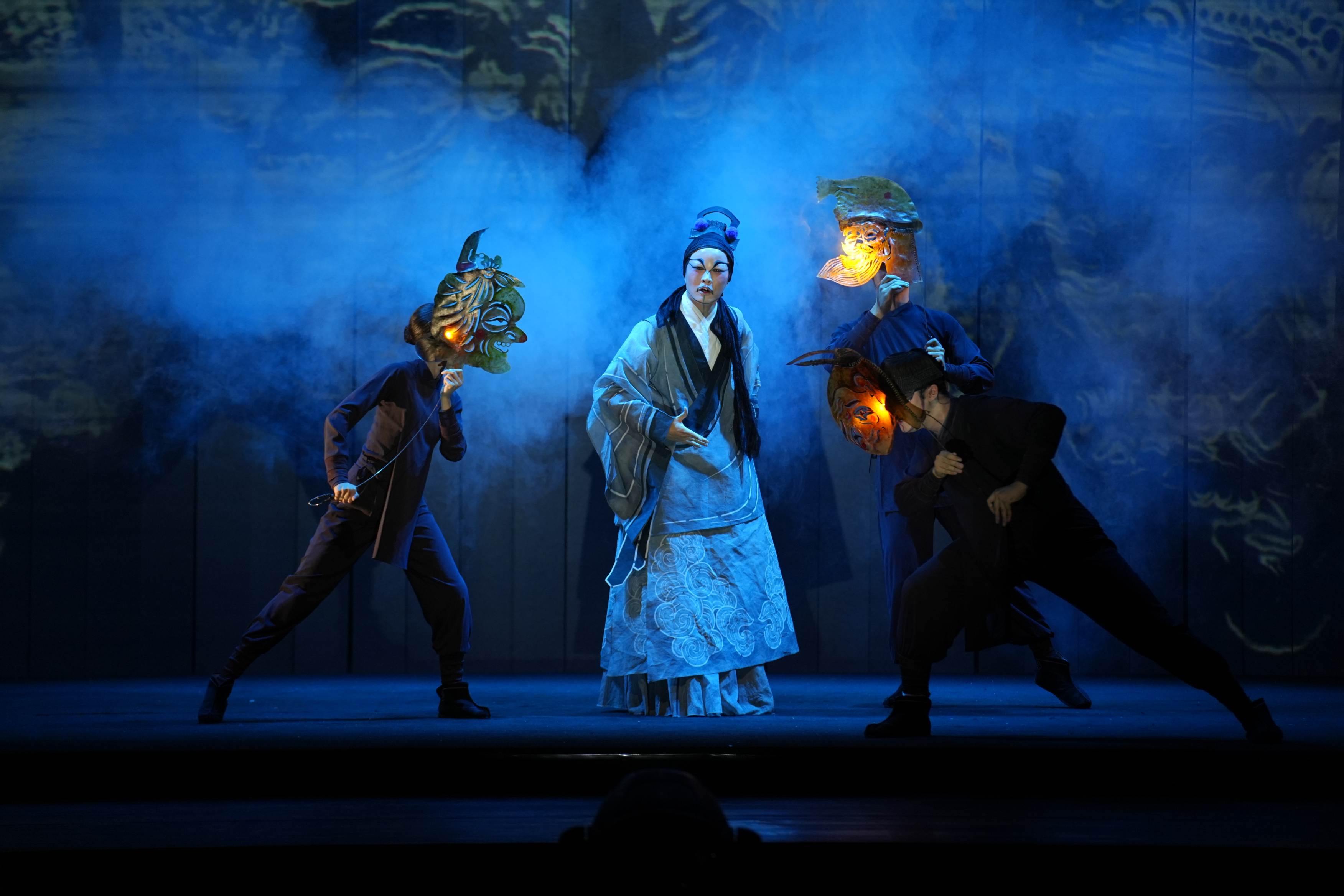
A strike of a bronze bowl signals a graceful descent into the dream. As two butterflies flutter onto the stage, the narrative weaves through a blend of reality and illusion. The play makes extensive use of shadow puppets and puppetry to represent Zhuang Zhou's dreams, memories, and imagined scenarios, conveying the characters' inner emotional states through the puppets' movements and rhythms. One notable moment is the introduction of the pivotal scene of "The Woman Fanning the Grave" through a shadow puppet sequence. This approach not only creates a magnificent world of imagination and enhances the play's ethereal, dreamlike atmosphere, but also produces an alienation effect, constantly reminding the audience that they are watching a "story" filtered, or even distorted, by Zhuang Zhou's subjective perspective, rather than an objective "reality." This resonates perfectly with the play's central theme: the ambiguous nature of "reality and illusion."
The actors' performances incorporate the stylized body movements, footwork, and conventions of Chinese opera, evoking the unique aesthetic of the East. In the play, Tian's sorrow, Zhuang Zhou's suspicion, and the Royal Scion of Chu's seduction are all conveyed through a glance or a turn of the head. This is particularly evident in the crucial scene where Tian, in the throes of an internal conflict, finally embraces the Royal Scion of Chu in the bridal chamber. Here, the performance strikes a delicate balance between realism and expressionism, externalizing a torrent of emotion in a manner that is both aesthetically refined and deeply resonant.
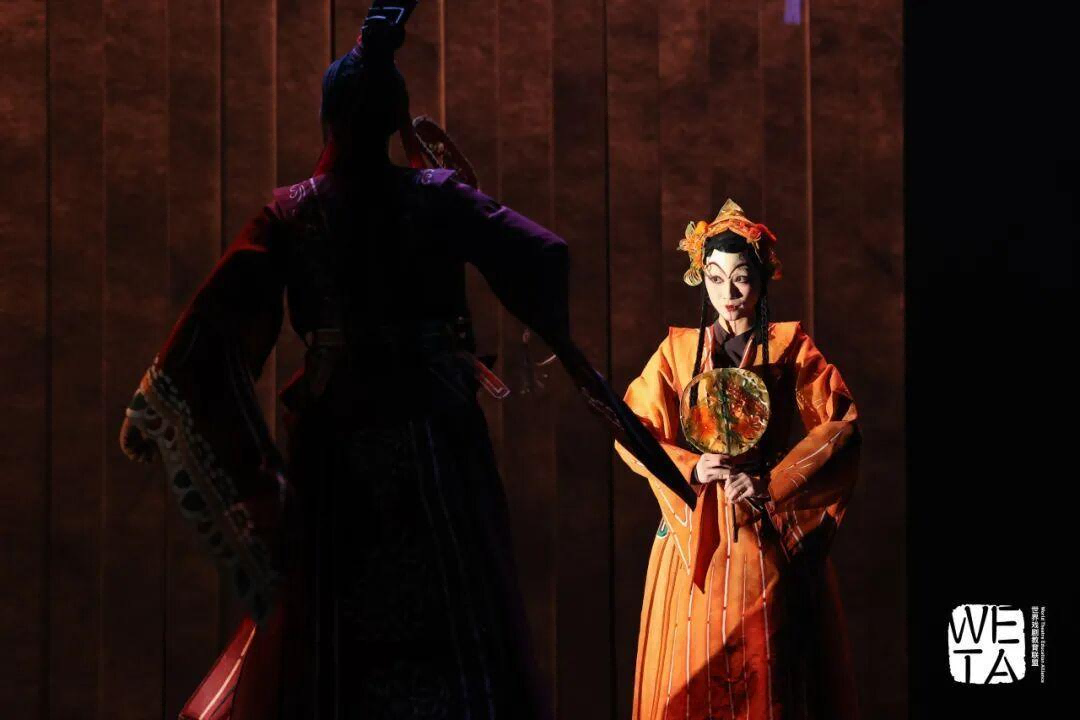

Stage Stills
The use of the chorus is another major highlight. The entire performance is carried by just five actors, who seamlessly shift between roles. At times, they serve as narrators observing the plot, while at others, they leap into the action to portray characters. They also transform into the voices of Zhuang Zhou's own inner debate, even commenting on the characters' actions. This fluid role-switching, combined with a delivery reminiscent of traditional Chinese storytelling (pingshu), shatters the confines of linear narrative. It allows stage time and space to flow freely, building a bridge between Zhuang Zhou's complex inner world and the external reality.
As a line in Zhuangzi: On the Equality of Things (Qiwulun) asks: "Did Zhuang Zhou dream he was a butterfly, or did the butterfly dream it was Zhuang Zhou?" When the bronze bowl is struck again, the audience seems to awaken from the dream alongside Zhuang Zhou. Perhaps the revelation offered by the play is that obsessing over the distinction between dream and reality is ultimately insignificant. What truly matters is the ability to let go of obsessive doubt and embrace the truth of the present moment. In his final awakening, Zhuang Zhou glimpses the Dao, not through control, but through surrender, arriving at a state where body and spirit, self and world, dissolve into one.
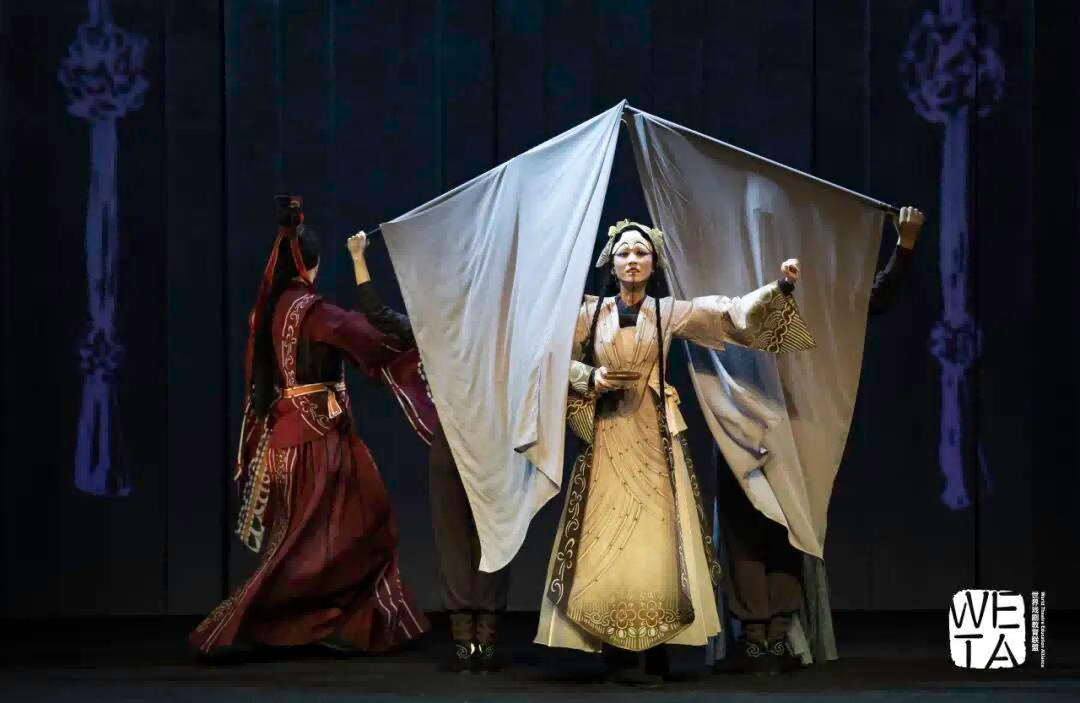
Stage Still
During the post-show talk, the creative team engaged in an in-depth discussion with the audience, covering topics such as directing, playwriting, and stage design. Costume designer Cui Xiaodong and makeup designer Sun Xiaohong explained that the choice to incorporate puppets, particularly shadow puppets, was rooted in a desire to honor and preserve traditional Chinese culture. This philosophy also influenced the design of costumes and characters. A major challenge was translating the two-dimensional art of shadow puppetry into three-dimensional facial makeup. The team ingeniously applied the traditional Chinese aesthetic principle of liubai (leaving blank space), using the linear elements typical of shadow puppets for outlining. They also commissioned custom-molded leather forehead pieces for the actors to emulate the visual style of shadow puppets. When discussing the script, playwright Chen Mengfan noted that the play's nested "dream-within-a-dream" structure embodies the concept of "the transformation of things" from Zhuangzi's philosophy, blurring the boundaries between reality and illusion, dream and wakefulness. The adaptation deliberately omitted certain plot elements from the original story to leave room for the audience's own interpretation and reflection.
Li Yuxuan, who played both the woman fanning the grave and a member of the chorus, spoke about the challenge of switching between roles on stage. She mentioned that a key part of the rehearsal process was mastering the precision required to embody each character's distinct personality. Furthermore, as her characters serve as a contrast to Tian, she had to both harmonize with the other actor's performance and differentiate her characters' unique relationships with Zhuang Zhou, achieving a balance between shared functions and individual traits.
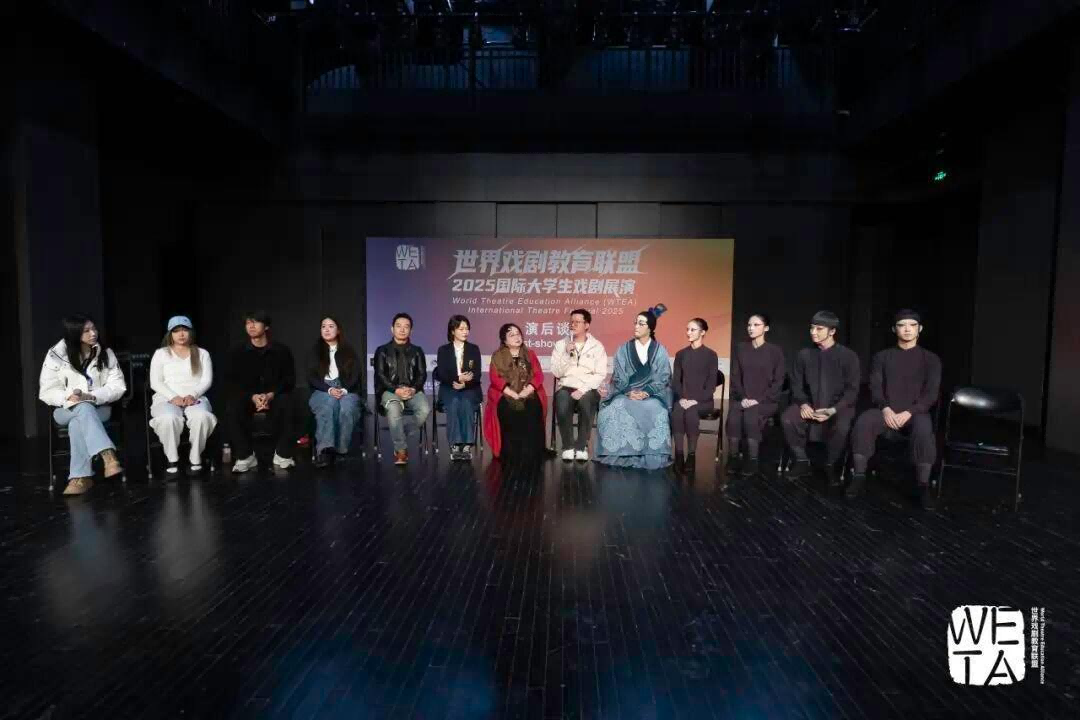
Post-Show Talk
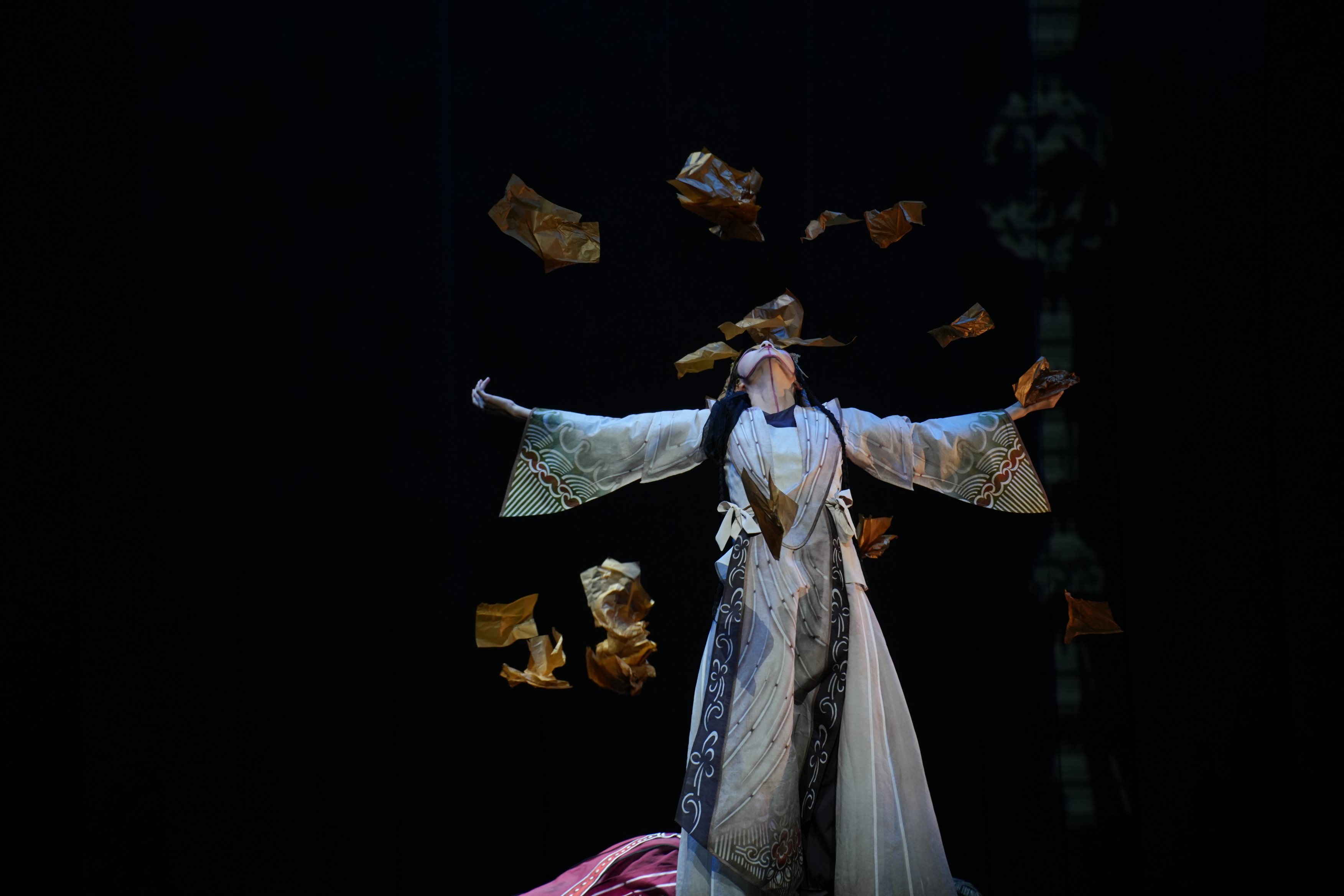
On the afternoon of October 25, Zhuangzi's Dream was performed at the Guangxi Provincial Art Museum. From the moment the theatre lights dimmed, the atmosphere was mesmerising. A low, rhythmic chant echoed through the space, instantly transporting the audience to a distant historical setting. As the plot unfolded, the actors' masterful performances seamlessly blended the stylised movements of Chinese opera with modern stage lighting and design, creating a stunning artistic synergy. The performance of Zhuangzi's Dream in Guilin not only provided the local audience with a high-calibre artistic experience but also revitalised traditional Chinese philosophy and culture through its innovative approach. It was a significant cultural exchange event, connecting the ancient with the modern and transcending cultural boundaries.

Stage Stills in Guilin
02 A Mechanical's Midsummer Night's Dream
By London Academy of Music & Dramatic Art, the UK
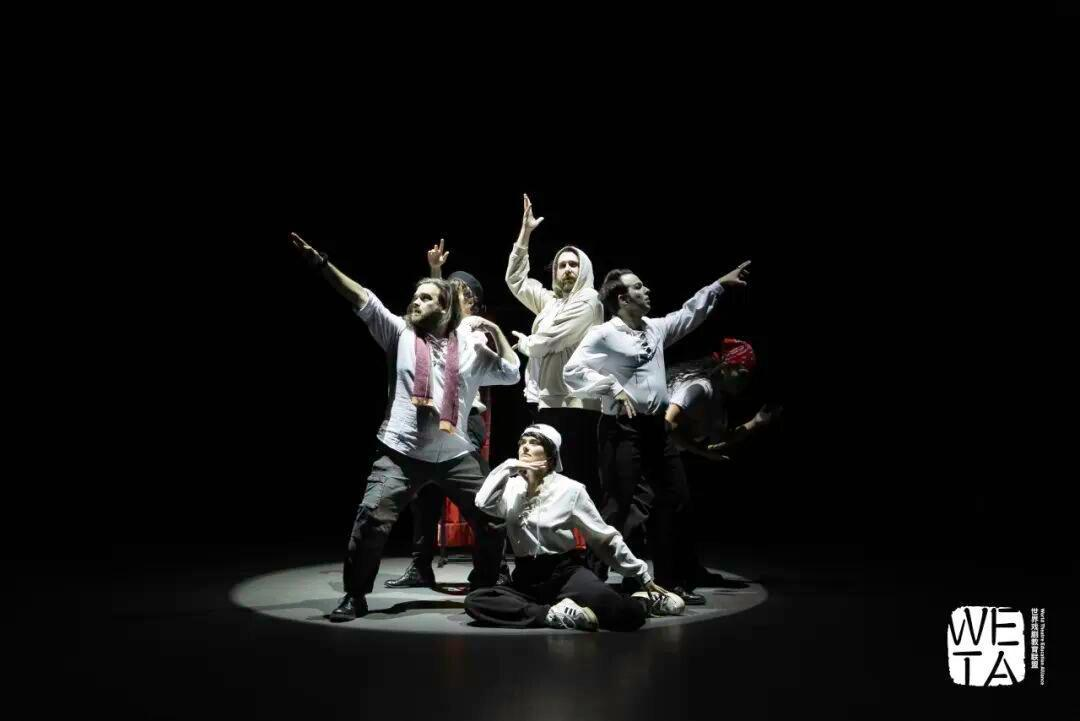
On the evening of October 20, the London Academy of Music & Dramatic Art presented A Mechanical's Midsummer Night's Dream at the Thrust Stage Theatre of the Theatre Centre on the Central Academy of Drama's Changping Campus. In this bold and hilarious reimagining of William Shakespeare's classic, the Rude Mechanicals step out of the margins and take centre stage to finally tell their side of the story. Set against a series of imaginative backdrops, from the city of Athens to woods, it tells the heartwarming story of how the six artisans meet, bond, and pursue their shared dream of the stage.

Production Photo
The six main characters are drawn from William Shakespeare's A Midsummer Night's Dream. In the original work, they are six Athenian craftsmen: Bottom the weaver, whose confidence borders on obliviousness; Quince the carpenter, the troupe's organizer; Snug the joiner, who plays the lion but fears he will frighten the ladies; Snout the tinker; Flute the bellows mender; and Starveling the tailor. These mechanicals ultimately perform the tragedy called The Most Lamentable Comedy, and Most Cruel Death of Pyramus and Thisbe at Theseus's wedding. Their clumsy acting and misinterpretations of the plot make them the purest source of comedy in A Midsummer Night's Dream. While this adaptation preserves their individual personalities and roles within the troupe, the plot focuses on the amusing misadventures that unfold as they meet and rehearse, highlighting their earnest passion for theatre.
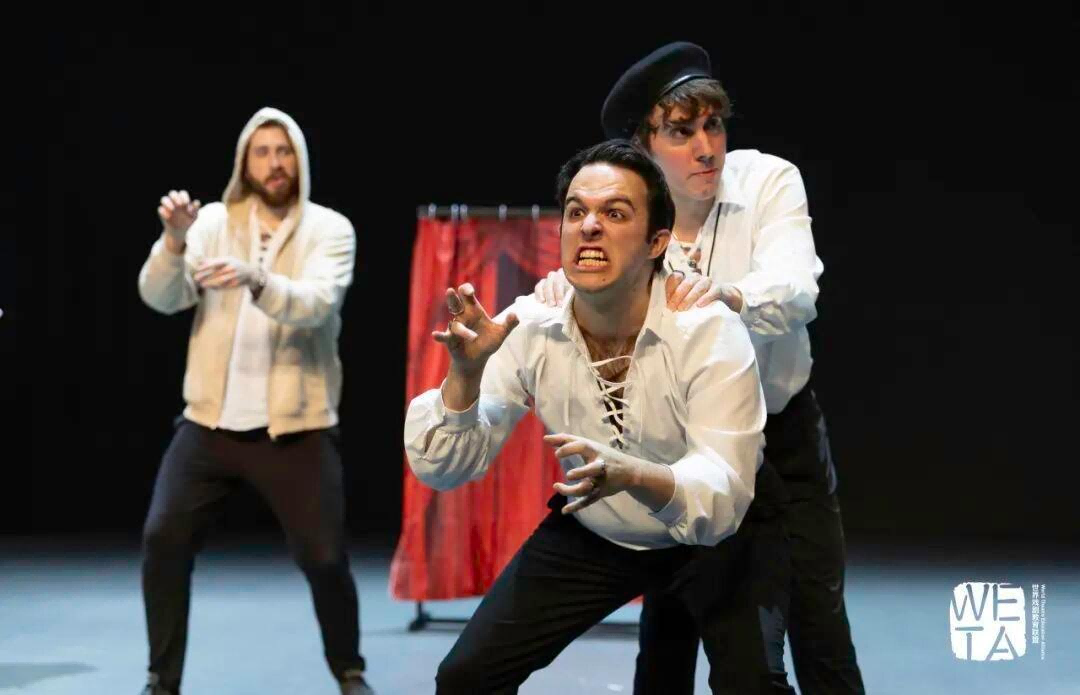
The stage design is minimalist, with a single, movable doorway curtain serving as the primary prop. Each time the actors part the curtain, it marks an "entrance onto the stage." Despite their humble circumstances, the mechanicals' passion for theatre remains undiminished. They hold up a sign that says "WILL ACT FOR MONEY," hoping for a simple chance to be recognized. Even when discriminated against by the city's police officers due to their low social status, forced into different trades, and barred from true artistic creation, they live by the creed: if they lack the means, they invent them. With no moonlight, they debate who should play the Moon. With no wall, they ponder how one might become a wall. Even when some are mockingly transformed into animals, they never give up. In the end, through sheer courage and sincerity, they finally take the stage they have so long dreamed of.
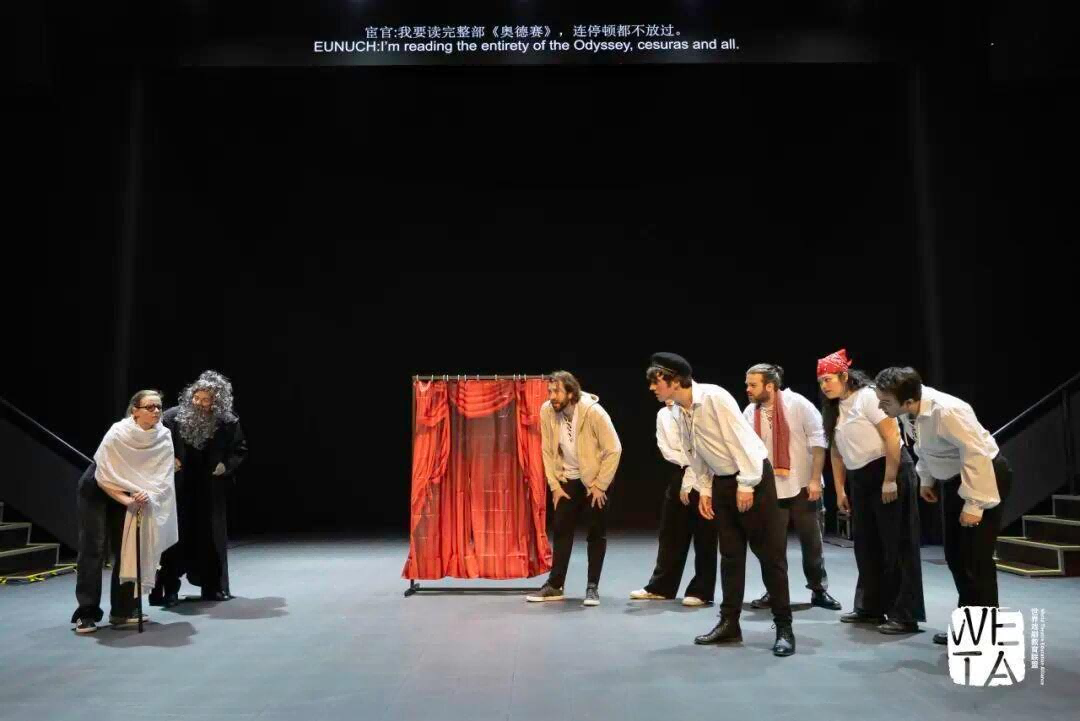
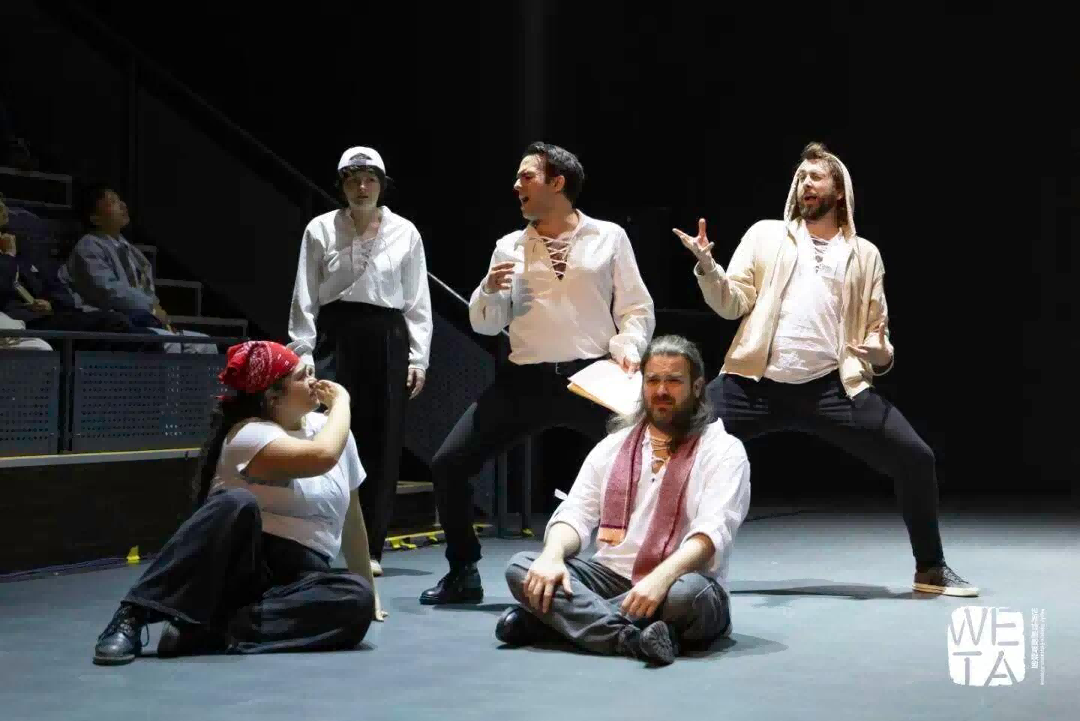
Stage Stills
In this stage interpretation of A Mechanical's Midsummer Night's Dream, the "crude" creators, long dismissed by the artistic establishment, are finally granted agency. Their mistakes are reframed as exploration, their awkwardness is reinterpreted as sincerity, and their fleeting moment of success is imbued with greater significance. By the end of the play, when they declare, "Theatre is an ephemeral art; We do it for those exact fleeting moments, and for the audience," they have become true actors in their own right. These often-overlooked "little people" show us that the essence of art may have less to do with pedigree and more to do with the sincerity of expression. Behind every piece of ridiculed "crude" art, there may lie a soul yearning to be seen.
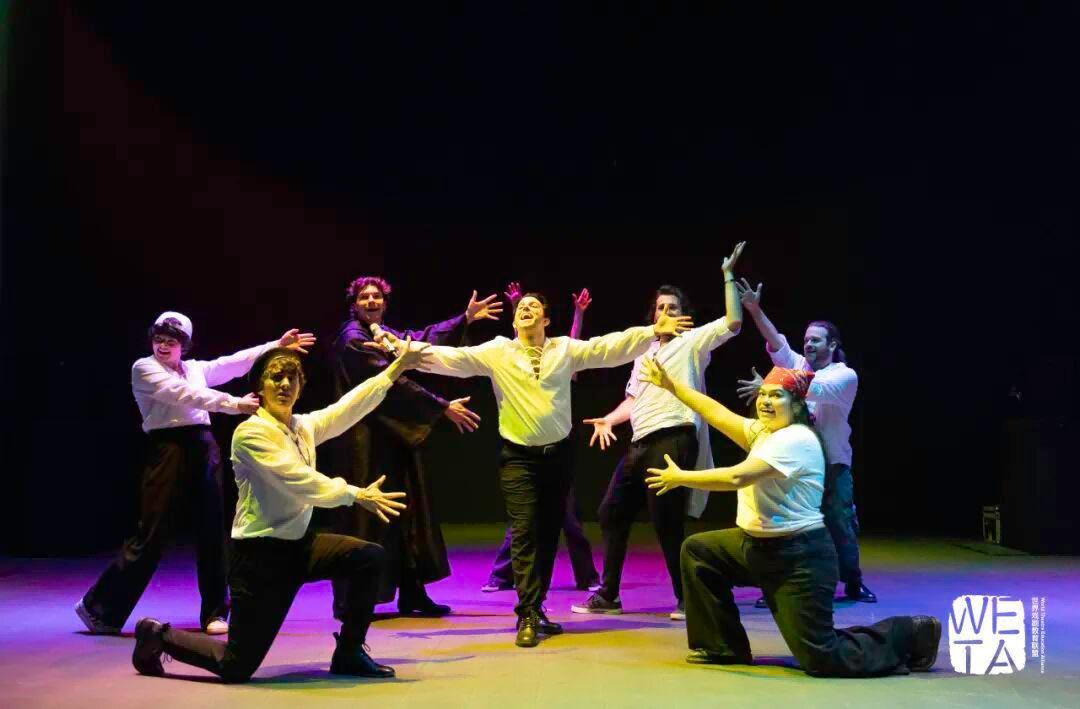
Stage Still
During the post-show talk, director Diego Zozaya drew upon his own life to share his perspective on theatre: "Theatre helps me think about what to do, how to live. At my lowest and most frustrated moments, it supports me and helps me find my center—it's my home." When discussing his approach to the adaptation, the director candidly shared that the play draws inspiration from classics such as Tom Stoppard's Rosencrantz and Guildenstern Are Dead and Luigi Pirandello's Six Characters in Search of an Author. He explained that, while building on these structural and comedic foundations, the creative process also incorporated the actors' genuine emotions and the improvisational chemistry that developed during rehearsals, ultimately culminating in the witty and humorous comedy presented on stage.
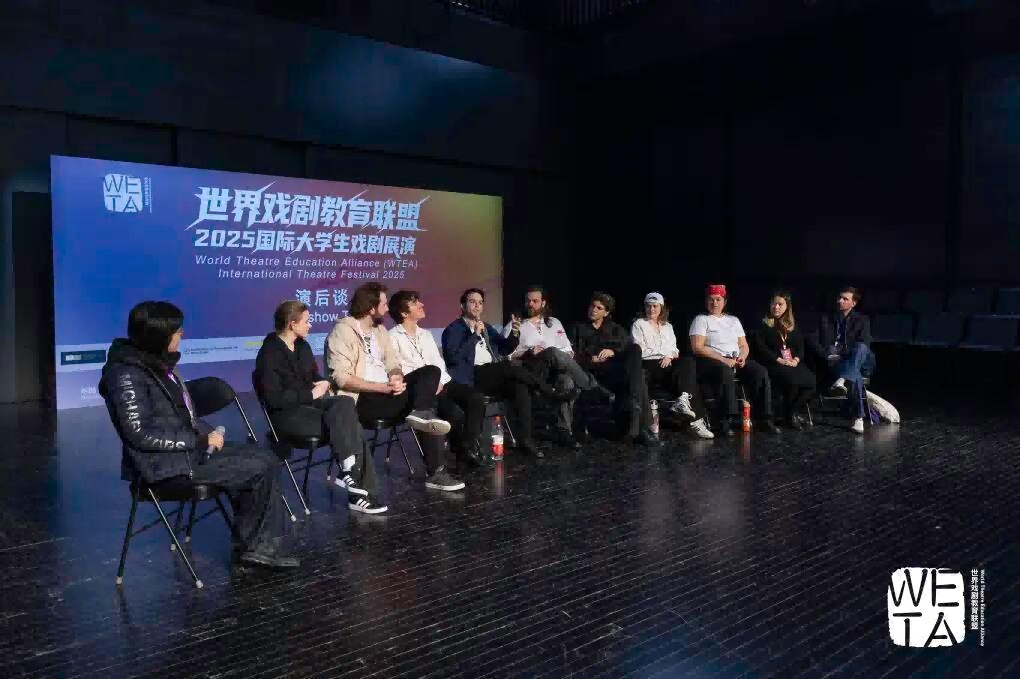
Post-Show Talk
On the evening of October 25,A Mechanical's Midsummer Night's Dream was performed at the Hill Theatre at Yushan Park, a famous scenic spot in Guilin. In this bold and hilarious reinterpretation of a Shakespearean classic, the marginalised "Rude Mechanicals" finally took centre stage to claim their story. "To act while experiencing the wonders of nature is a fantastic experience!" said Diego Zozaya, the play's director, after the show. He added that the actors loved performing in Guilin's outdoor venue, where they could fully immerse themselves in their roles amidst nature. The mountains behind the stage, illuminated by the lights, were breathtaking and heightened the performance's poetic allure. He also remarked on the warmth and friendliness of the Guilin audience, calling it an unforgettable and beautiful night.
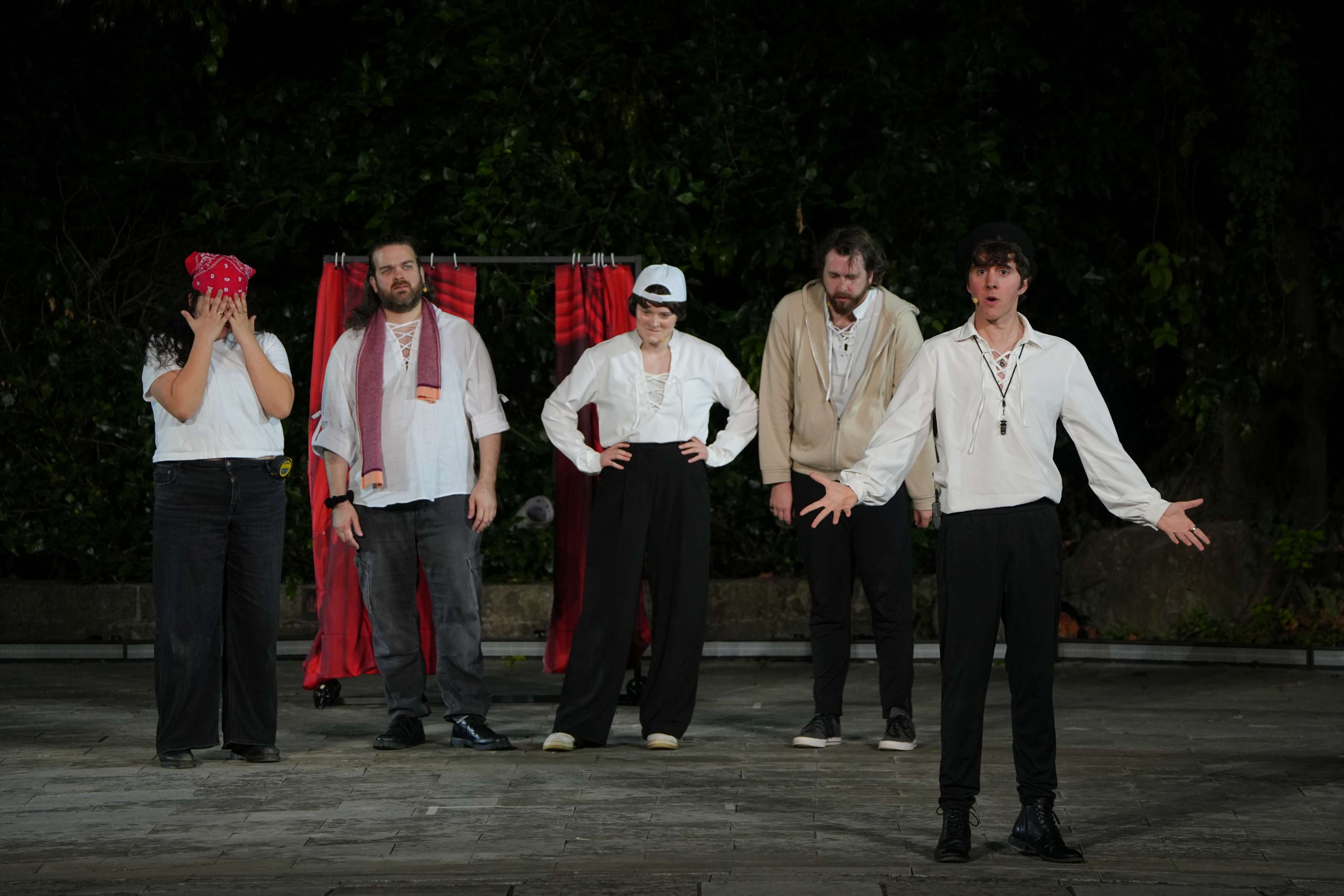
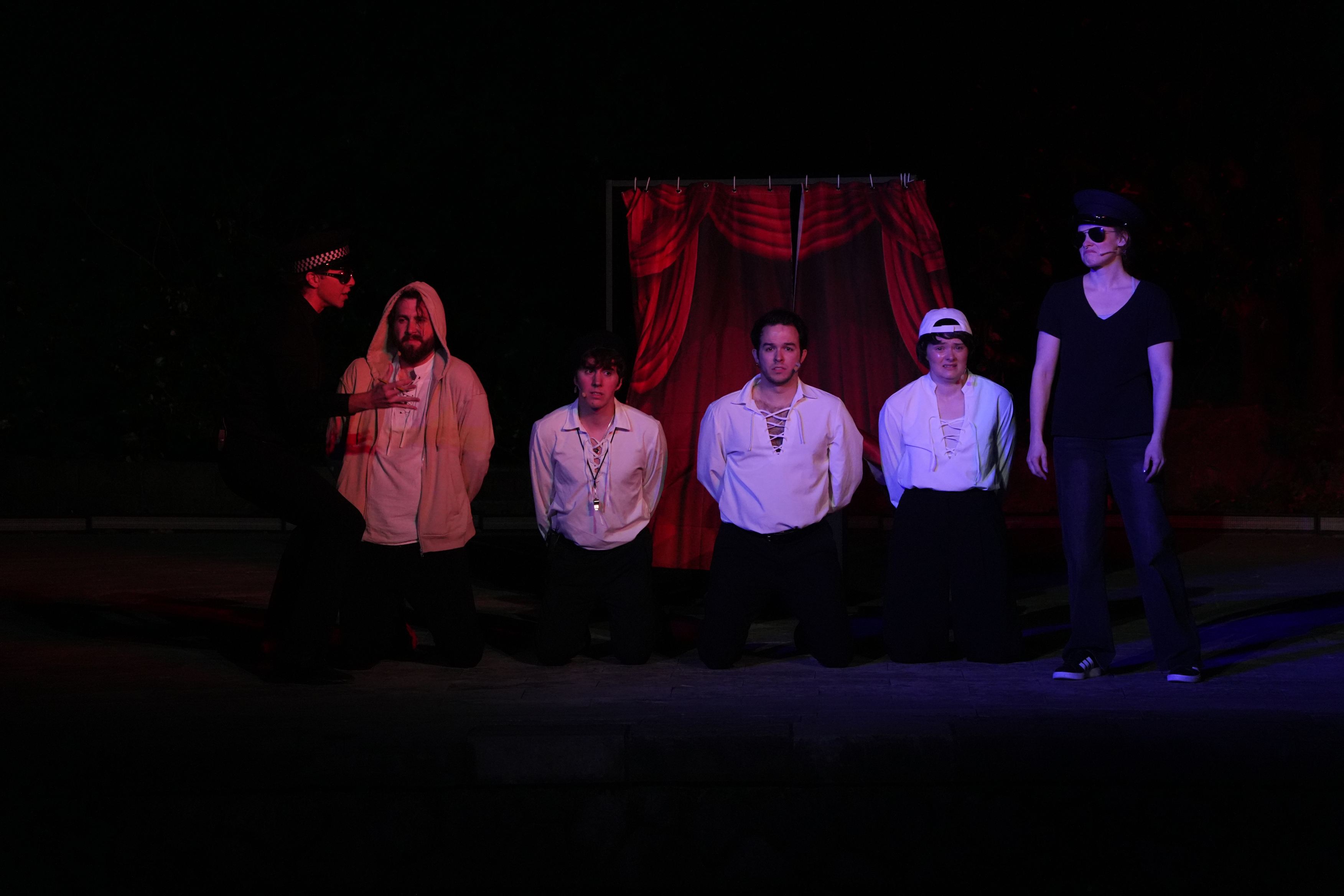
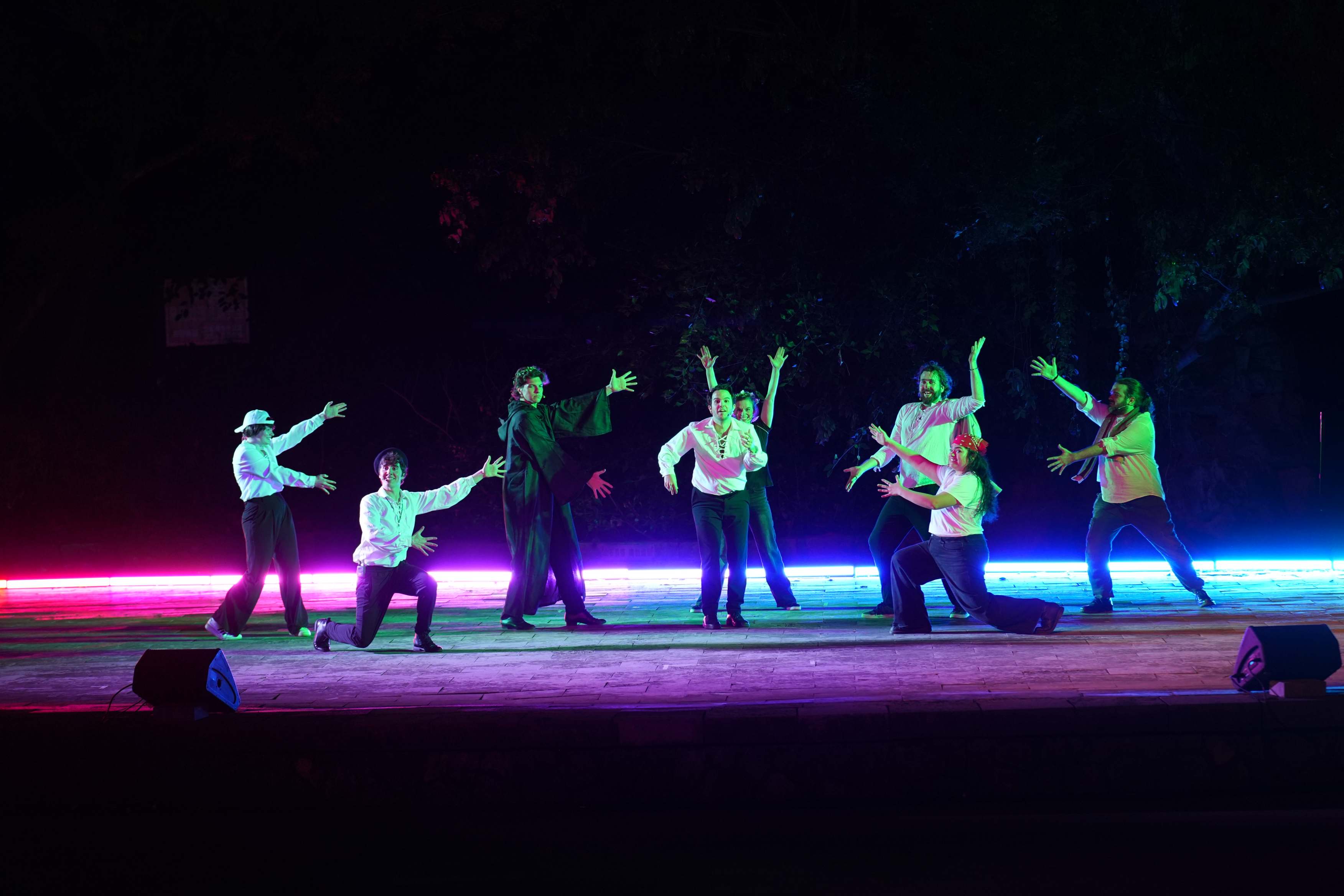
Stage Stills in Guilin
03 154 Ways to Say "I Love You"
By Oklahoma City University School of Theatre, the USA
On October 21, the School of Theatre at Oklahoma City University presented a moving production,154 Ways to Say "I Love You", to audiences at the Thrust Stage Theatre of the Theatre Centre on the Central Academy of Drama's Changping Campus. Drawing upon selected pieces from William Shakespeare's Sonnets and weaving them together with iconic characters from his plays, the production seeks to portray the multifaceted nature of love through his original verse, complemented by evocative, wordless physical movement.
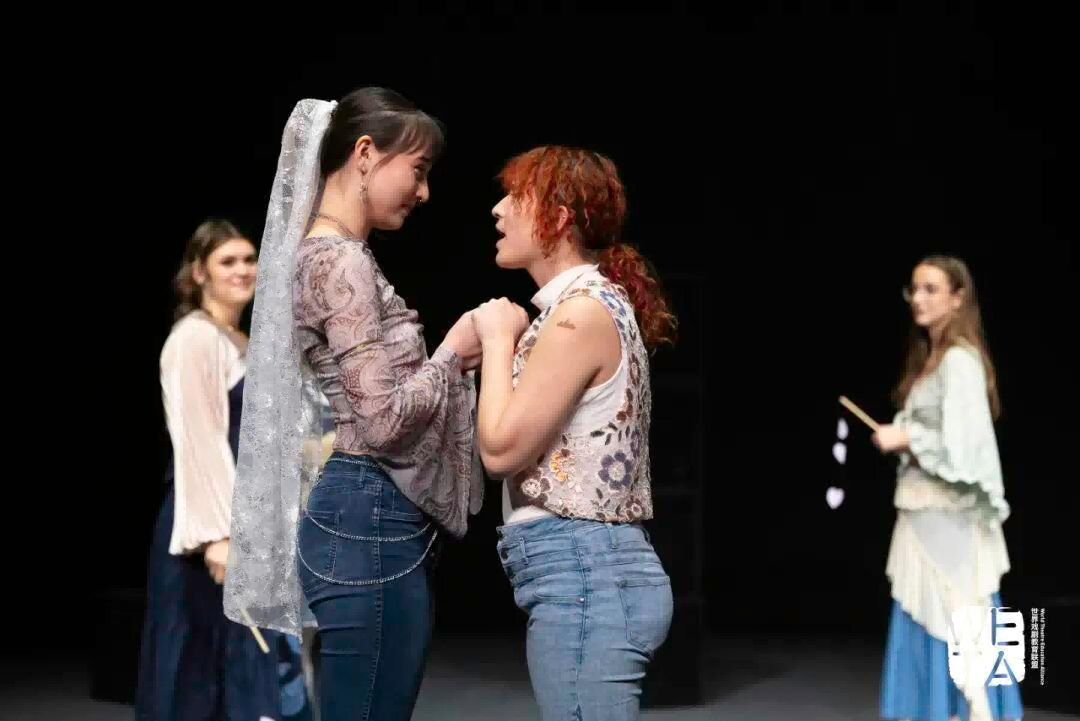
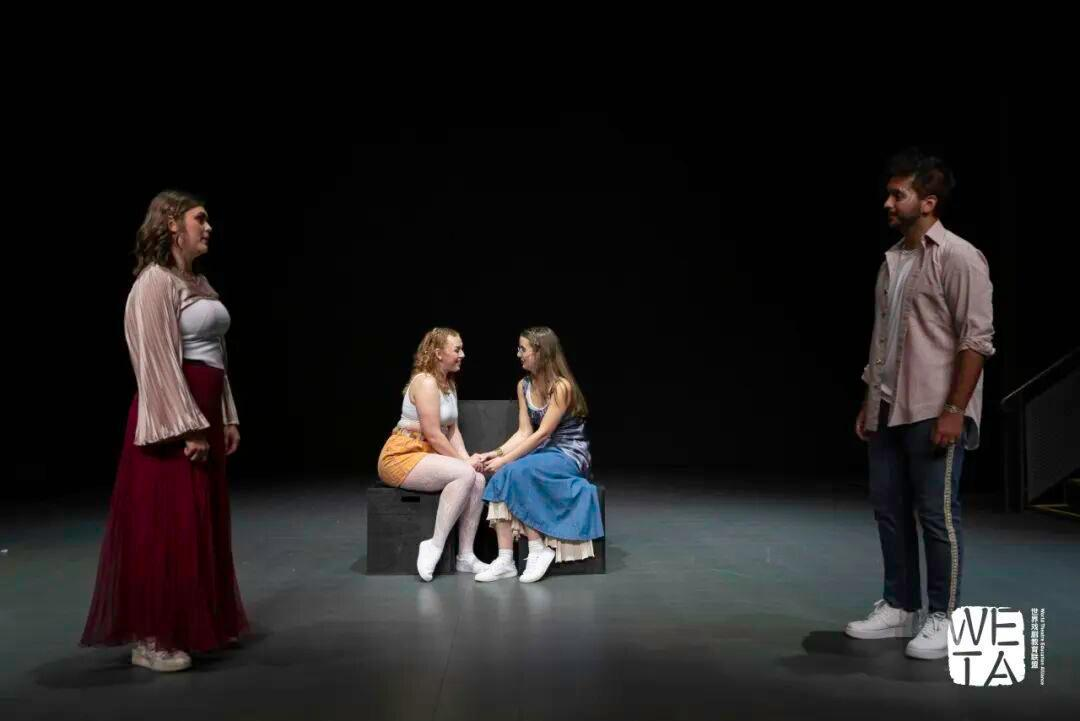
Stage Stills
Tackling Shakespeare, a cornerstone of English literature, is no small feat. In 154 Ways to Say "I Love You", the director and cast leverage the universal theme of love to invite audience members to interpret the work through the lens of their own experiences, creating a resonance that transcends language and nationality. The production deconstructs and reassembles Shakespeare's classic texts, juxtaposing, splicing, and recontextualizing familiar material into a collage of love's many forms.
By dismantling the original contexts of Shakespeare's texts, the play foregrounds the theme of "love" in its myriad forms: the love that blossoms from friendship, the love torn apart by death, and the love tested by constant quarrels. The director creatively reassigns sonnet monologues to three couples, who are themselves amalgams of various Shakespearean characters. This framing device breaks the isolation of the monologue, grounding the drama in specific, albeit fluid, situations. The characters evoke their original counterparts but are not confined by them. Consequently, the actors are not portraying single, defined roles but rather serving as vessels for the spirits of Shakespeare's diverse characters. They are not subjects expressing their own emotions, but objects through which the universal experience of "love" is channeled and presented on a minimalist stage. As a result, seemingly disconnected vignettes—“A Wedding”, “The Break Up”, and “Denial”—are woven together by the common thread of love.
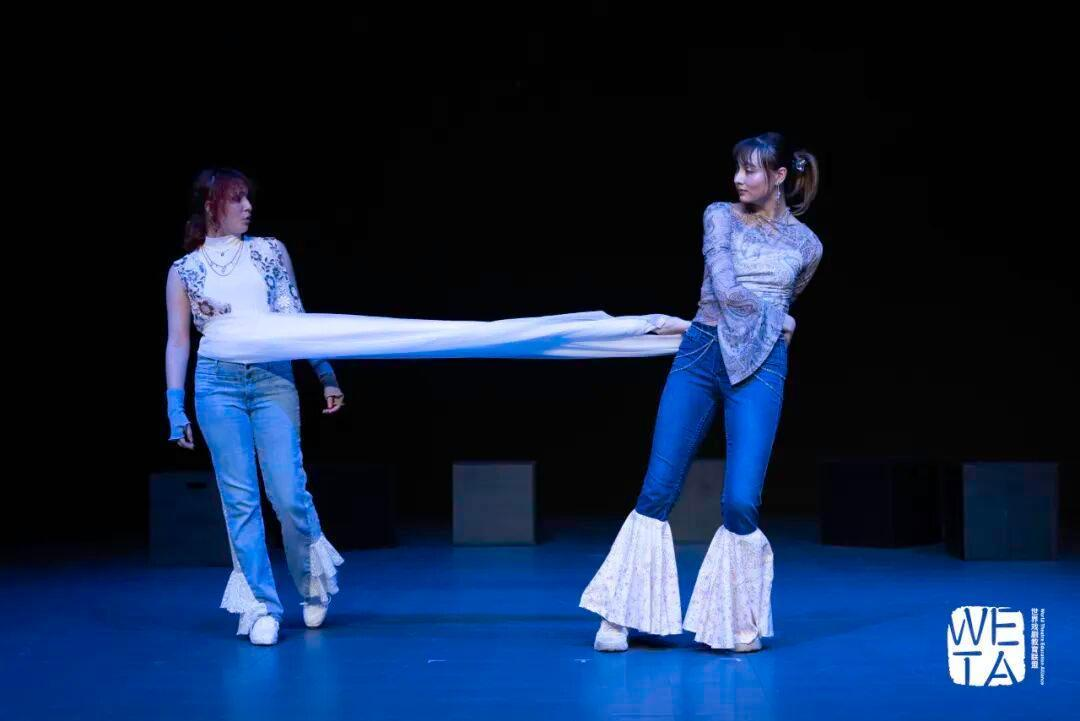
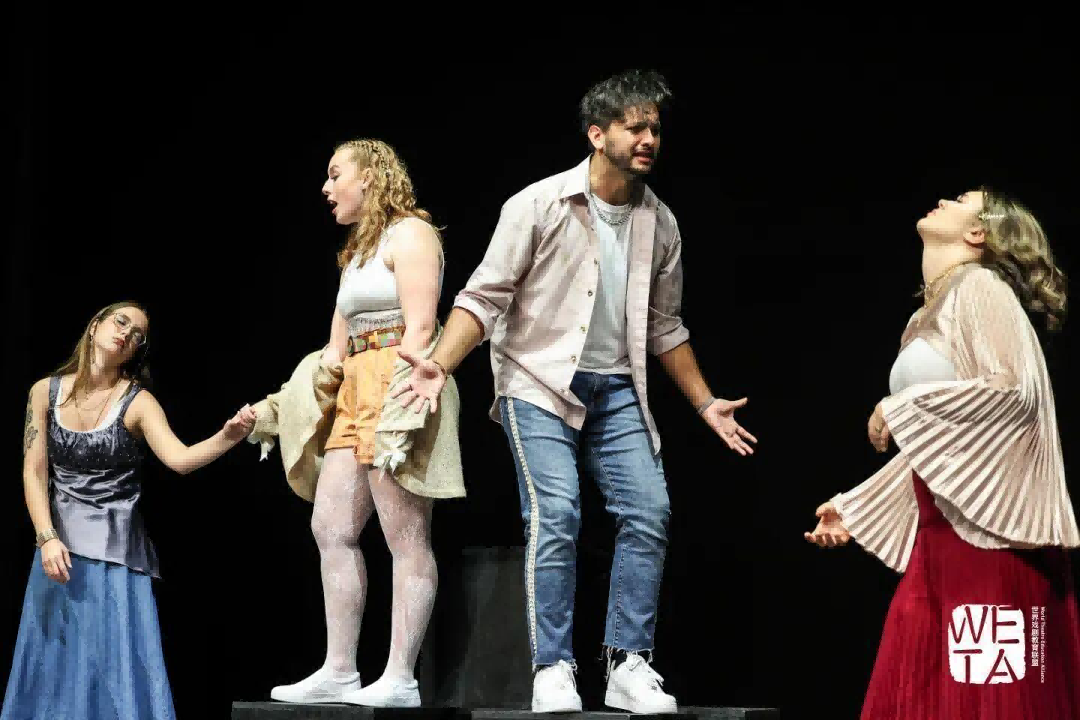
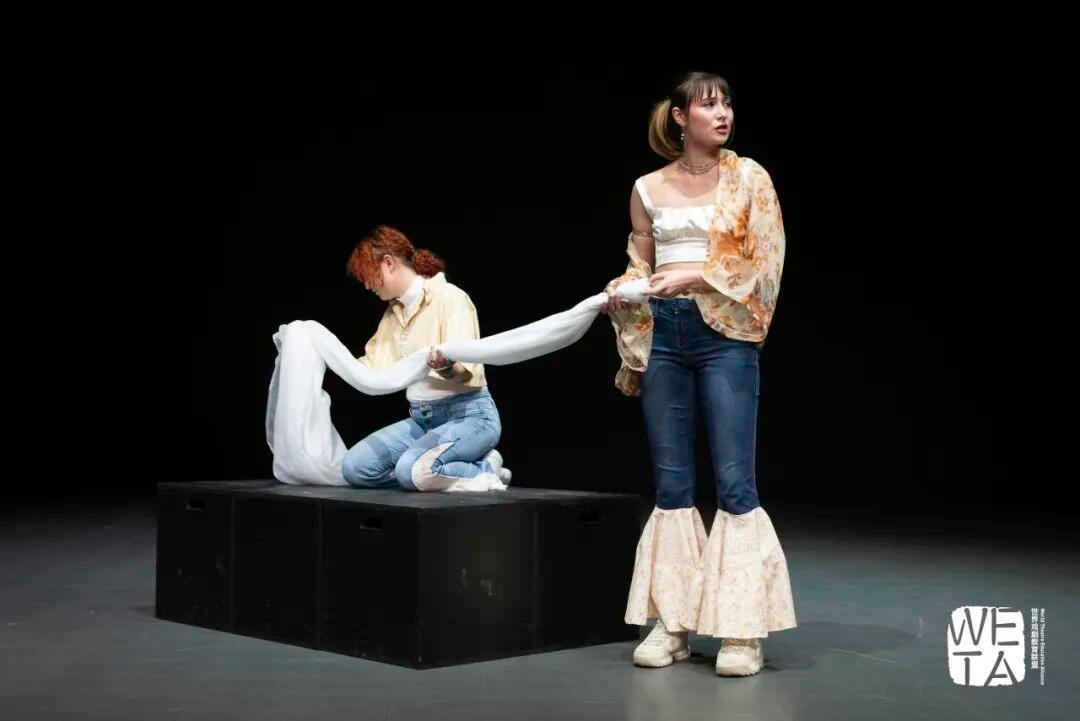
Stage Stills
The set design for 154 Ways to Say "I Love You" is minimalist, featuring only six black boxes. This versatile setup offers vast expressive and imaginative possibilities for both the performers and the audience. Amidst this simplicity, a veil of gauze is arguably the production's most crucial prop. On one hand, the fabric's inherent fluidity allows it to merge with the actors' movements, becoming a vehicle for deeper meaning. On the other hand, the gauze serves as a metaphor for the characters' relationships, symbolizing both the distance of mortal separation and the tangled nature of intimacy.
Stage Still
The costumes in 154 Ways to Say "I Love You" are not historically accurate replicas but are instead styled like contemporary everyday wear. This allows for quick changes between scenes while also supporting the play's core themes. This intentionally anachronistic and versatile approach to costuming becomes, in itself, a part of the thematic statement. By avoiding specific period details, the costumes untether the characters from any single social identity or era. This choice underscores the idea that the experience of love is timeless and universal, transcending the ages. Thus, the play's exploration of "what is love?" extends beyond the stage, inviting every member of the audience to re-examine the question for themselves.
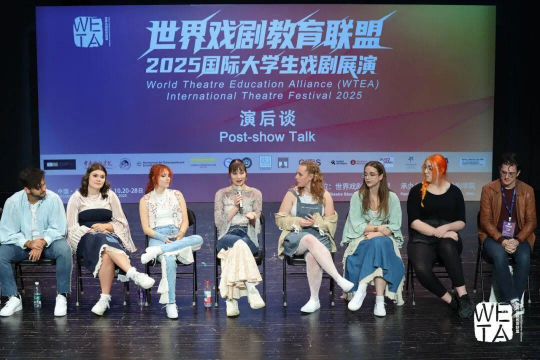
Post-Show Talk
On the afternoon of October 26, 154 Ways to Say "I Love You" was performed in the Cave Theatre at Seven Star Park, another must-visit place in Guilin. The production used minimalist props, such as black boxes and a veil of gauze, to express character relationships and stage tension. Despite differences in language and culture, the theme of "love" reveals commonalities among nations and peoples, highlighting shared experiences in how love is perceived and pursued across time and space. Director Kris Kuss shared that he believes in true love and that his favourite of Shakespeare's classic sonnets is Sonnet 116, which includes the classic line, "Love's not Time's fool, though rosy lips and cheeks / Within his bending sickle's compass come." He added, "To be able to perform this play in the Cave Theatre is a fantastic opportunity. We've never performed in a cave before, and knowing the rich history of the cave at the Seven Star Park makes it an even greater honour."
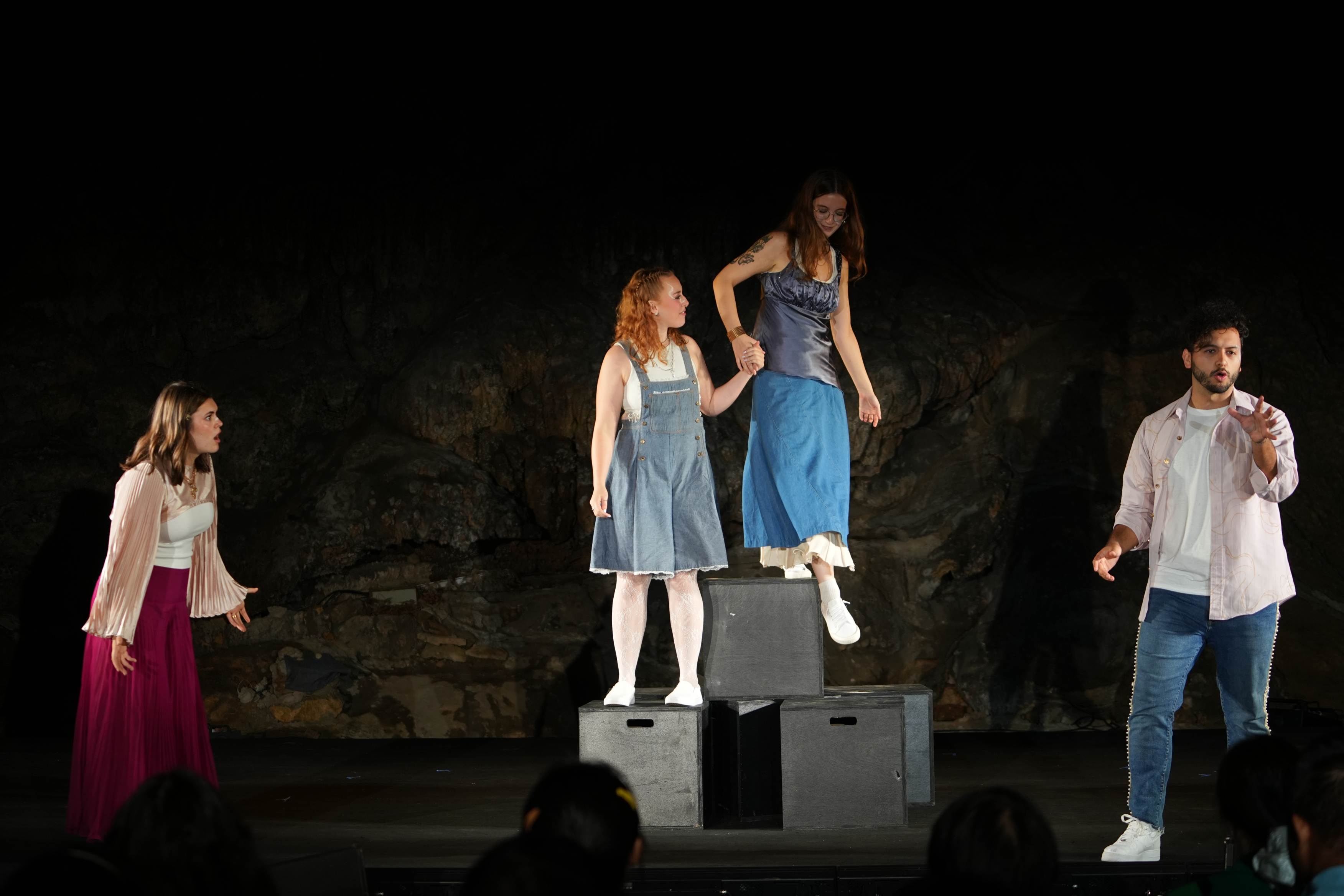
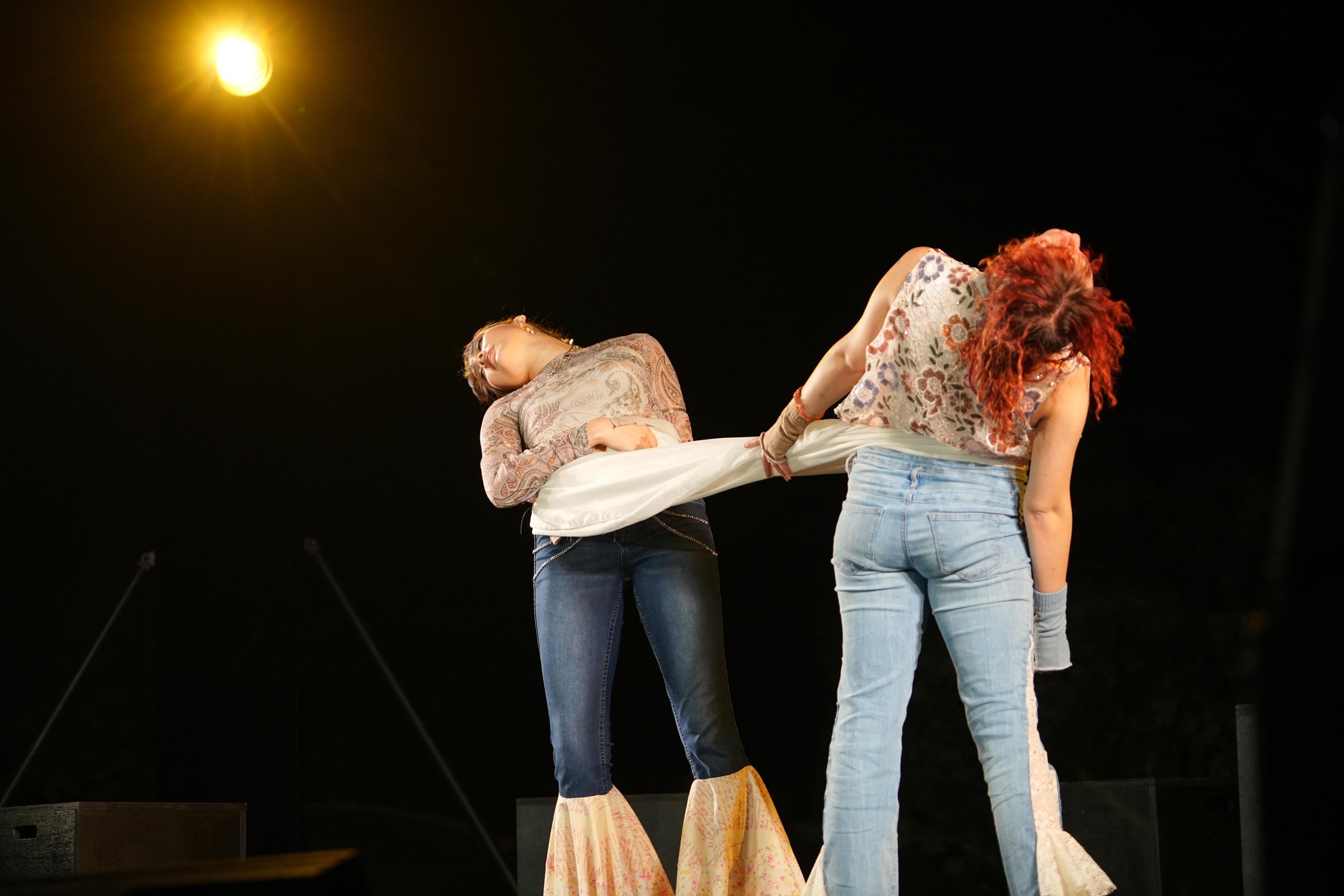
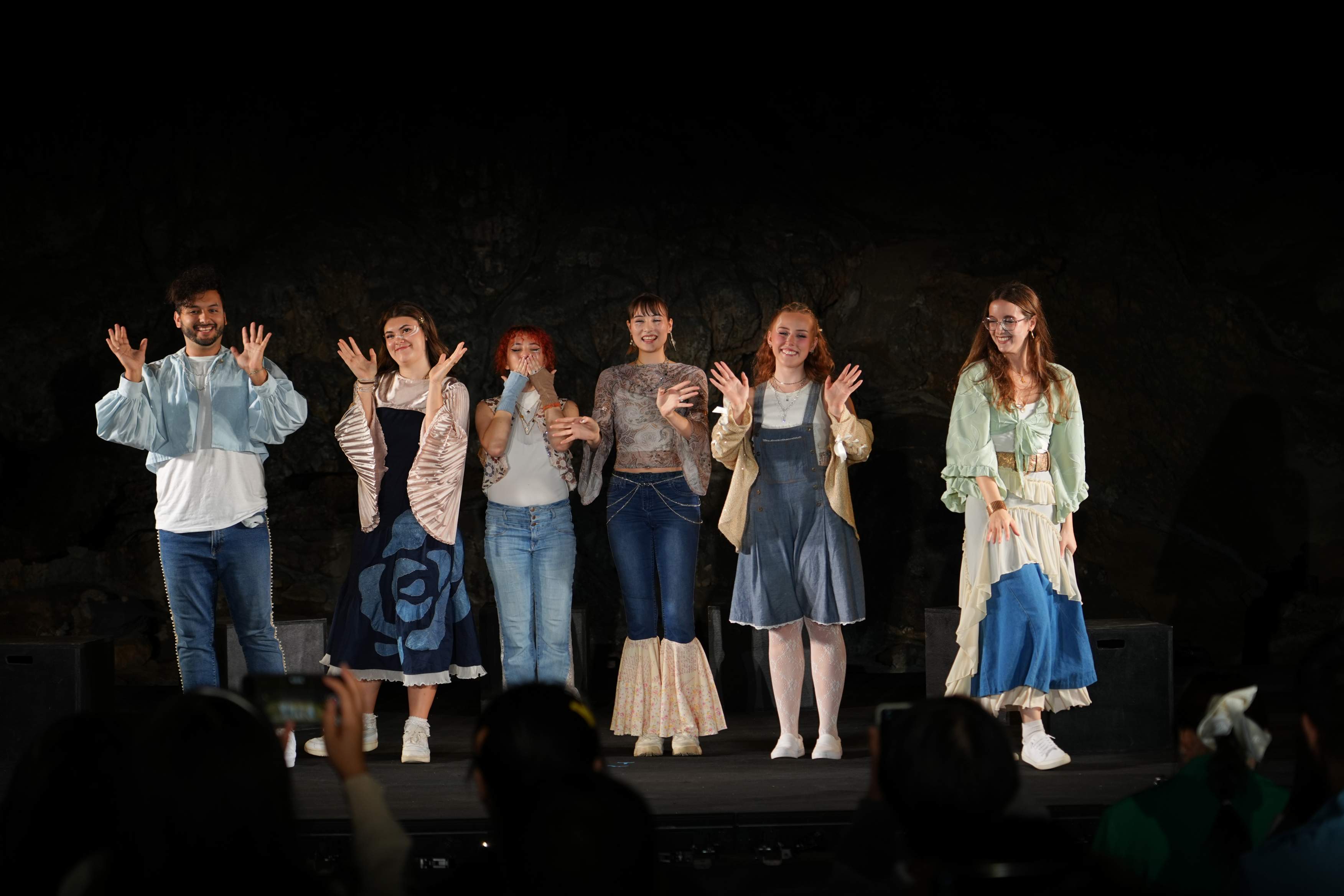
Stage Stills in Guilin
04 A Very Simple Story
By Russian Institute of Theatre Arts - GITIS, Russia
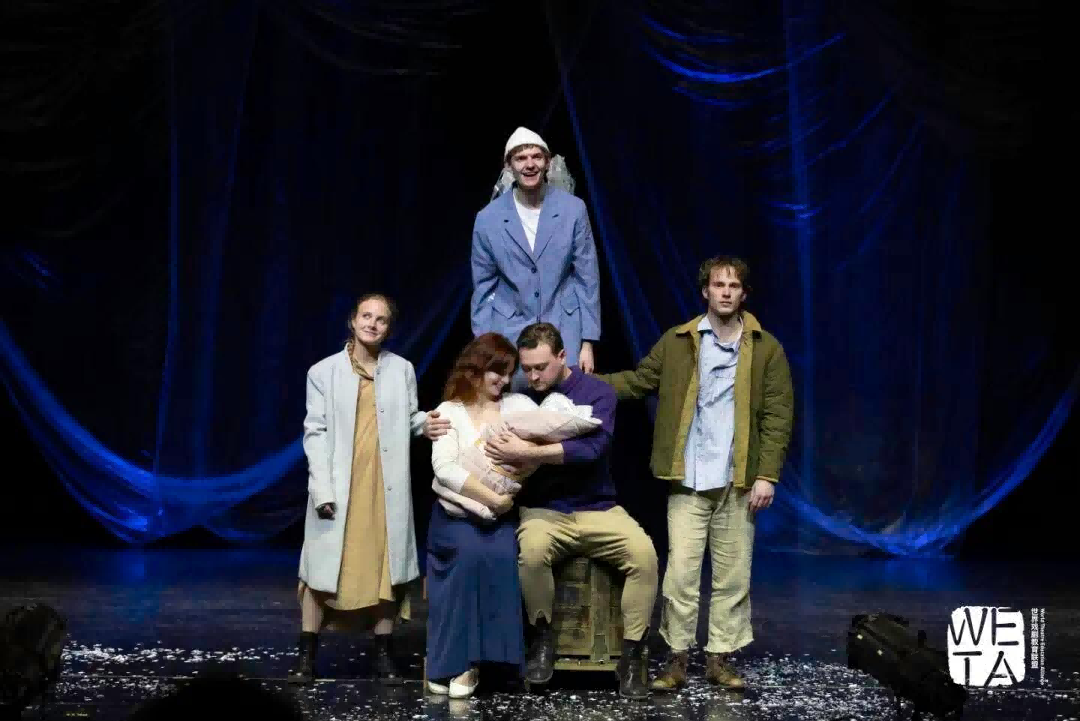
On the evening of October 21, the Russian Institute of Theatre Arts - GITIS presented A Very Simple Story at the Proscenium Stage Theatre of the Theatre Centre on the Central Academy of Drama's Changping Campus. The play is set on a Russian farm, where the master's daughter, Dasha, falls in love with the neighbor's son, Alexei. Their romance, however, is disapproved of by Dasha's parents from the start. When Dasha becomes unexpectedly pregnant and the neighbor is caught stealing the master's home-brewed liquor, relations between the two families plummet to an all-time low. Amidst this fierce conflict, the farm animals embark on a desperate rescue mission for the unborn child, setting the stage for a heartwarming comedy about love, friendship, and solidarity.

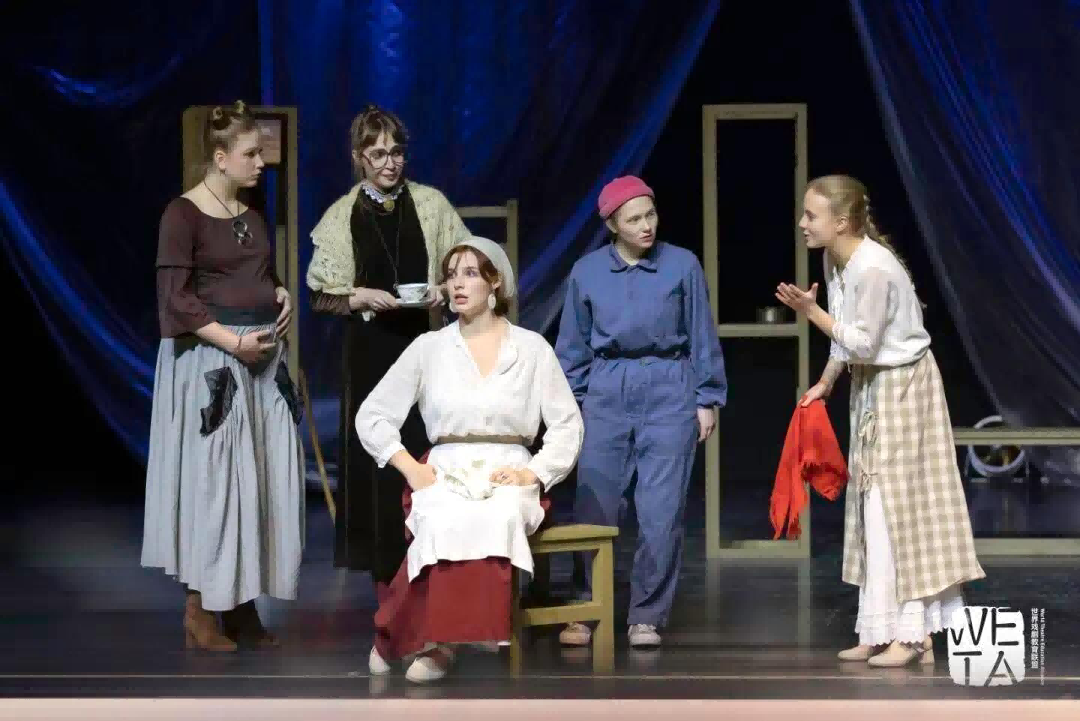
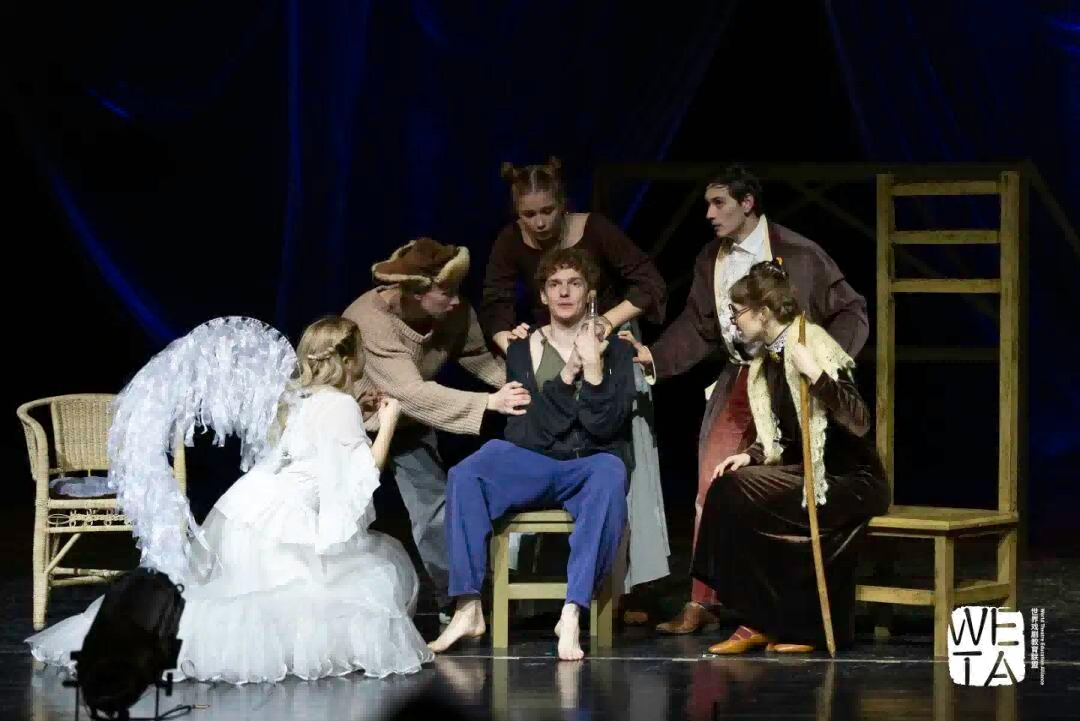
Stage Stills
The central animal characters—a pregnant cow, an old horse, a worldly-wise dog, a boisterous rooster, and even a piggy who dreams of flying—are all anthropomorphized. The creative team eschewed traditional costumes and animal masks. Instead, the actors defined their characters through nuanced physicality and body language, which, combined with concise dialogue, allowed each animal's personality to emerge naturally. This approach proved highly effective; the actors' superb performances and their precise grasp of animal mannerisms allowed the audience to readily accept the premise without being taken out of the experience. This subtle characterization helps us transcend the species barrier and stand in solidarity with these kind-hearted creatures. Beneath their comical antics lies an undeniable sincerity. Therefore, when the piggy inevitably meets its end at the master's hand, we are deeply stirred; when the old horse offers its life to become the child's guardian angel, we are moved to our core. The animals' actions serve as a poignant reminder that in our busy lives, we often neglect what is most precious: sincere emotional connections, compassion for the vulnerable, and a reverence for life itself.
The character of the neighbor is particularly compelling. This eccentric, alcoholic petty thief is, paradoxically, the only human who can see the spirits of the dead animals and hear them speak, thus becoming a bridge between the human and animal worlds. While humans see only his poverty and misconduct, the animals, who communicate with him as an equal, see the kindness in his heart. When the old horse, ready to die, asks him to be the one to pull the trigger, the neighbor cannot bring himself to do it, despite the other animals' pleas. The neighbor's suicide near the end marks the play's climax, casting a tragic shadow over the comedy. Did he take his life to become the child's guardian angel? Was it a response to his son's accusations, leading him to lose his will to live? Or was it a final act to resolve the feud and unite the star-crossed lovers? The play leaves these questions unanswered, but we know that his death stems from a deep-seated kindness, and it is this unease and guilt that ultimately lead him to take his own life.
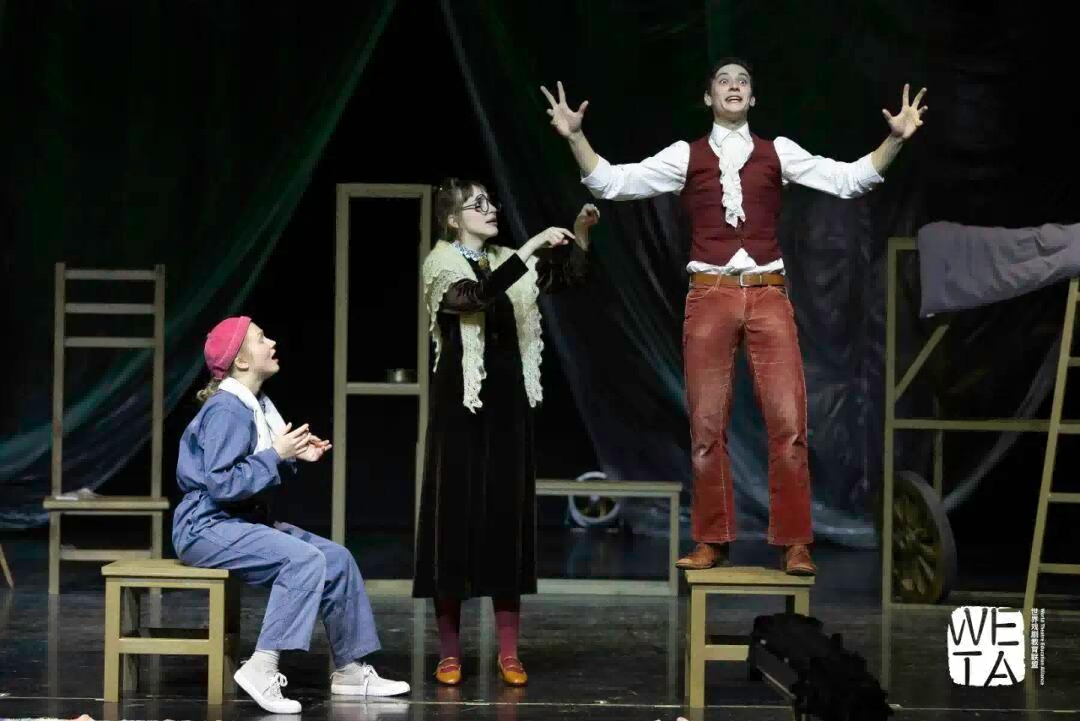
Stage Stills
Perhaps what is most moving about A Very Simple Story is its redefinition of "simplicity." In a complex era of inscrutable motives, what truly matters? Alexei resents his father for failing to provide a better life; the master, looking down on the neighbor's low status, cruelly demands that his daughter have an abortion. While the human characters are ensnared by complications of their own making, fixated on external success, the animals bask in the pure joy of being. The piggy muses that "living is better," while the other animals ponder "what is a river" and "what is a city." The playwright prompts us to consider: have we overcomplicated the essence of life? At the play's conclusion, the baby is born and the family is finally reunited. When all the characters—including the spirit of the deceased neighbor—return to help name the newborn he died to protect, we experience not just a heartwarming resolution, but a kind of poetic justice. Pure kindness dissolves the bitter conflicts, and a beautiful, simple tableau of life unfolds before our eyes. A Very Simple Story suggests that the most profound truths are often hidden in the simplest of narratives, waiting for us to listen with our hearts—just as we might listen to talking animals.

Stage Still
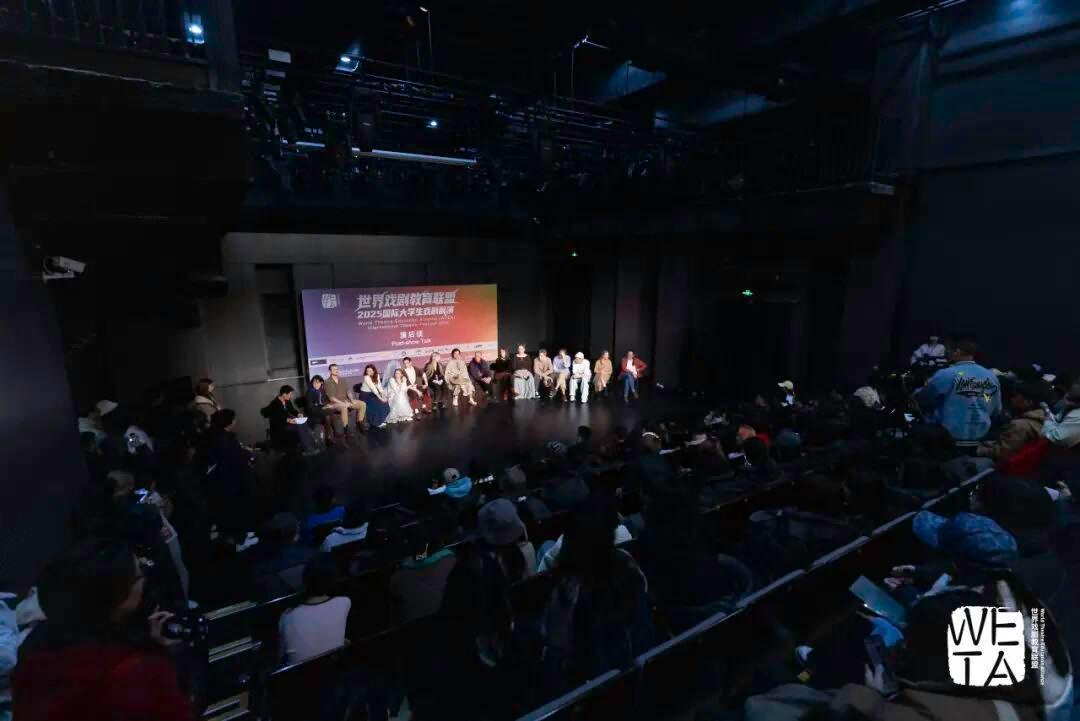
During the post-show talk, director Professor Aleksei Blokhin explained his rationale for making animals the protagonists. He values the pure, direct hearts of animals: "An animal is an animal. If it likes something, it likes it; if it doesn't, it doesn't." The play's fantastical premise creates an imaginative space for this cross-species dialogue, allowing humans and animals to communicate and better understand one another. When asked why the master, a seemingly cruel man from the animals' point of view, was granted a heartwarming conclusion, the director's answer was succinct: "Every one of us has the opportunity to become an angel." His response, which honors the character's complexity, also echoes the play's core message: human nature is not black and white, and as long as goodwill remains, the possibility of redemption is always within reach.
Post-Show Talk
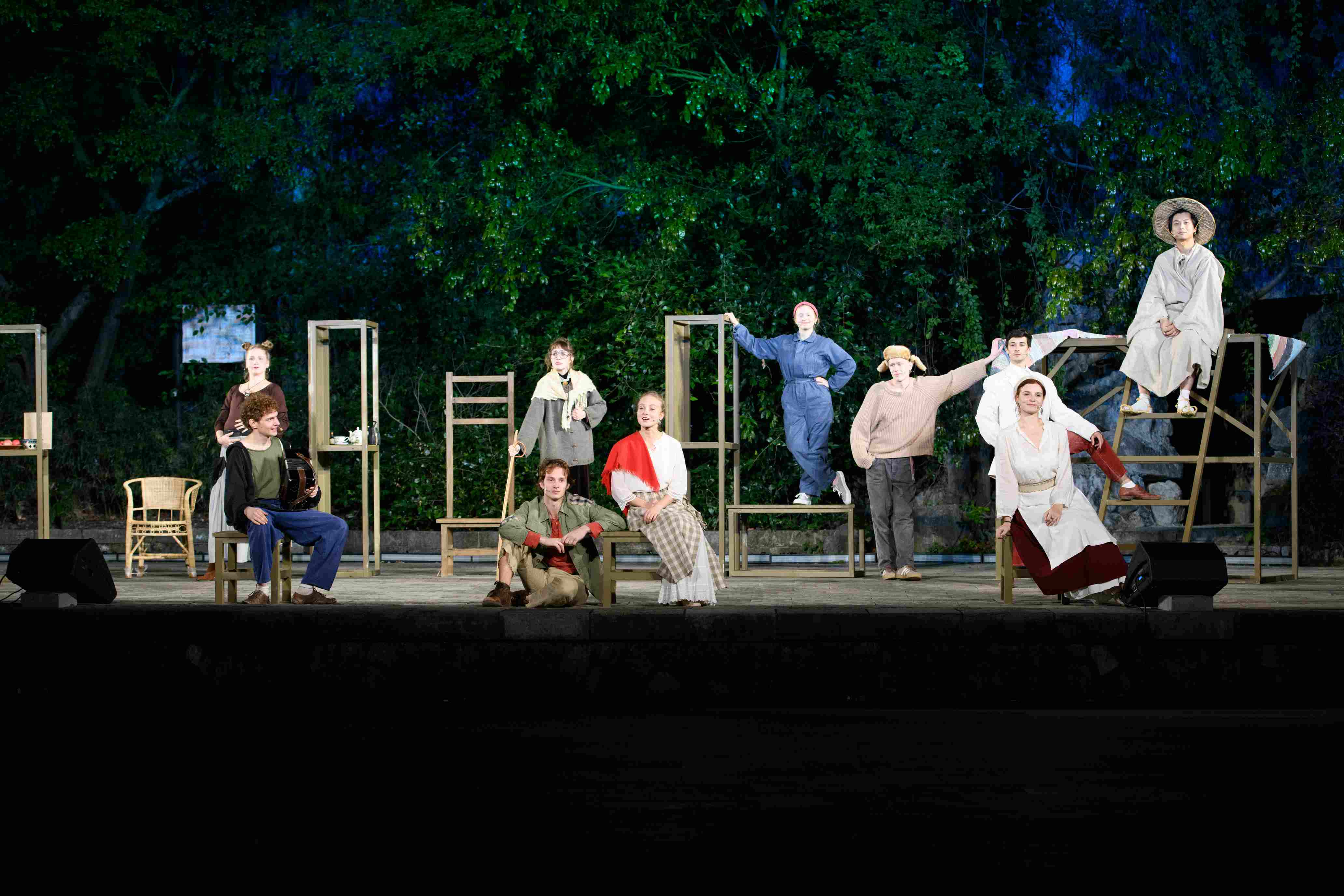
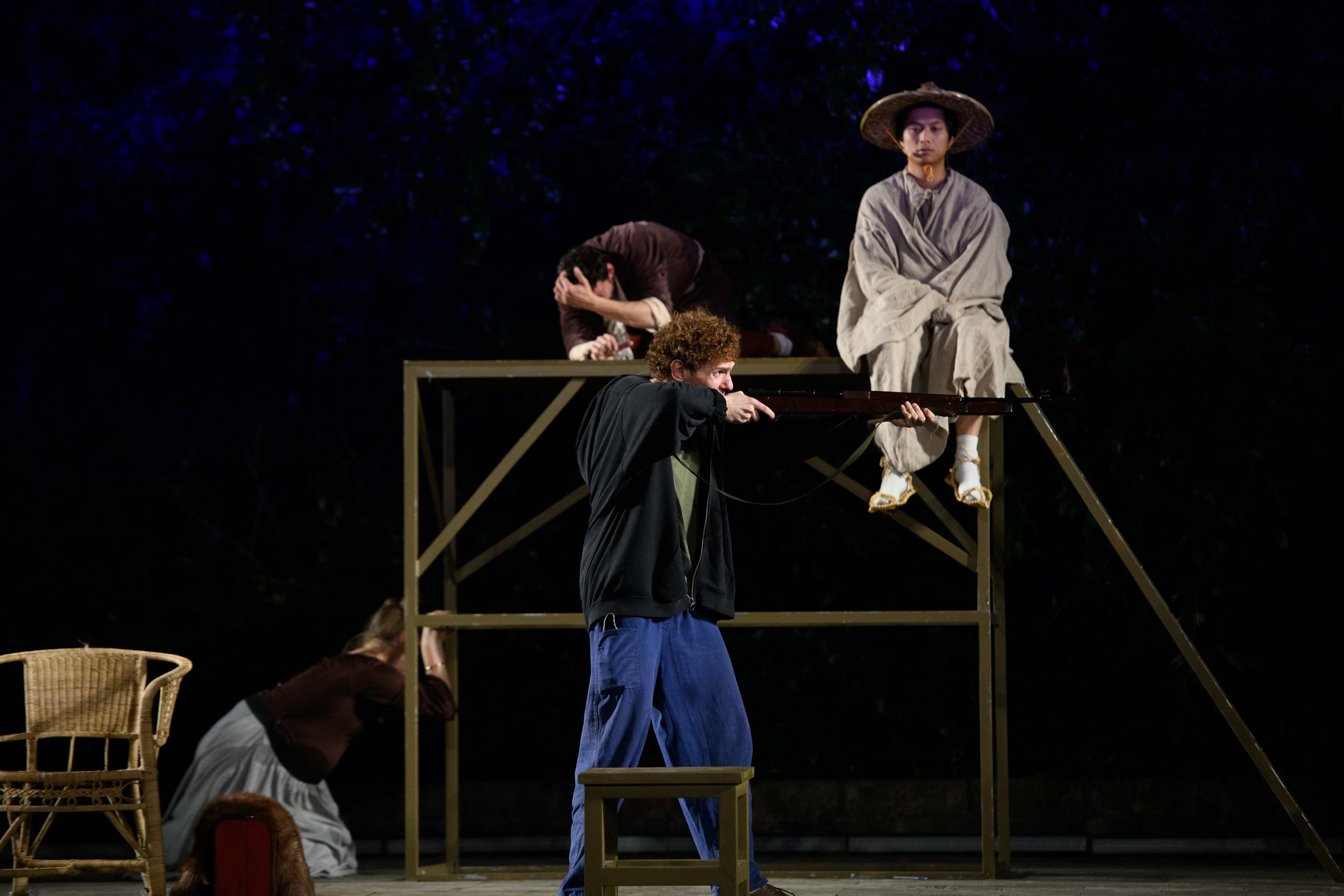
On October 26, A Very Simple Story was presented to the Guilin audience at the Hill Theatre in Yushan Park. The story, set on a Russian farm, harmonised perfectly with the rugged cliffs and lush greenery of Yushan Park, creating a perfect fusion of drama and landscape. Though a story from a foreign land, it resonated with every member of the audience. It was a simple story—a story about love. As the play came to an end, its emotional resonance lingered in the air, leaving a lasting imprint on the soul.

Stage Stills in Guilin
05 Orpheus and Eurydice
By the Athens Conservatoire Drama School, Greece
On October 22, the Athens Conservatoire Drama School from Greece presented an innovative reinterpretation of the ancient myth of Orpheus and Eurydice at the Proscenium Stage Theatre on the Central Academy of Drama's Changping Campus. In this production, the classic lovers are freed from their archetypal constraints. Reimagined in countless forms across the river of time, they stand as champions of love in defiance of materialism, inviting the audience in Beijing 2025 to join them in a collective call for a love powerful enough to illuminate the world.
Deep from mythology, emerges a myth about powerful, undying love. Orpheus and Eurydice loved each other so greatly, that when Eurydice died, Orpheus descended into the underworld to get her back. According to legend, he was the greatest musician and poet, using his gifts to bend all divine and natural law in order to reconnect with his love. Hades released Eurydice under one condition: If Orpheus were to look at her before arriving to the earth's surface, she would disappear back into the world of the dead. In their difficult ascent to the overworld, from fear of losing her again, in a moment of panic, Orpheus turned his eyes on her. What followed was a second death, tearing them apart once again.

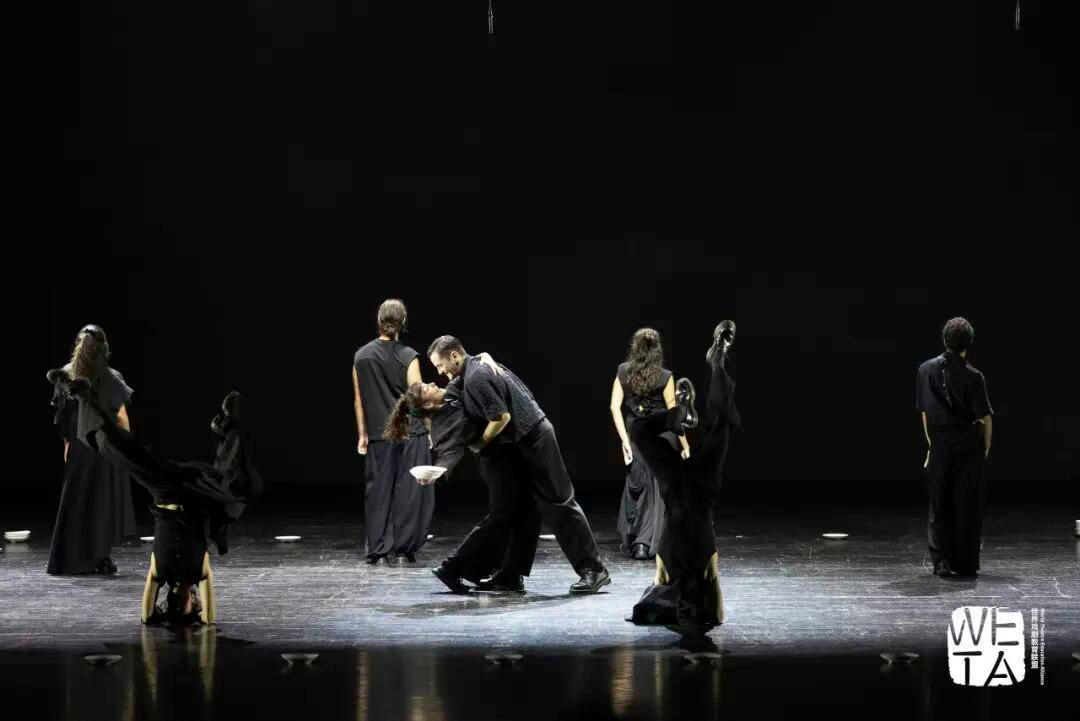
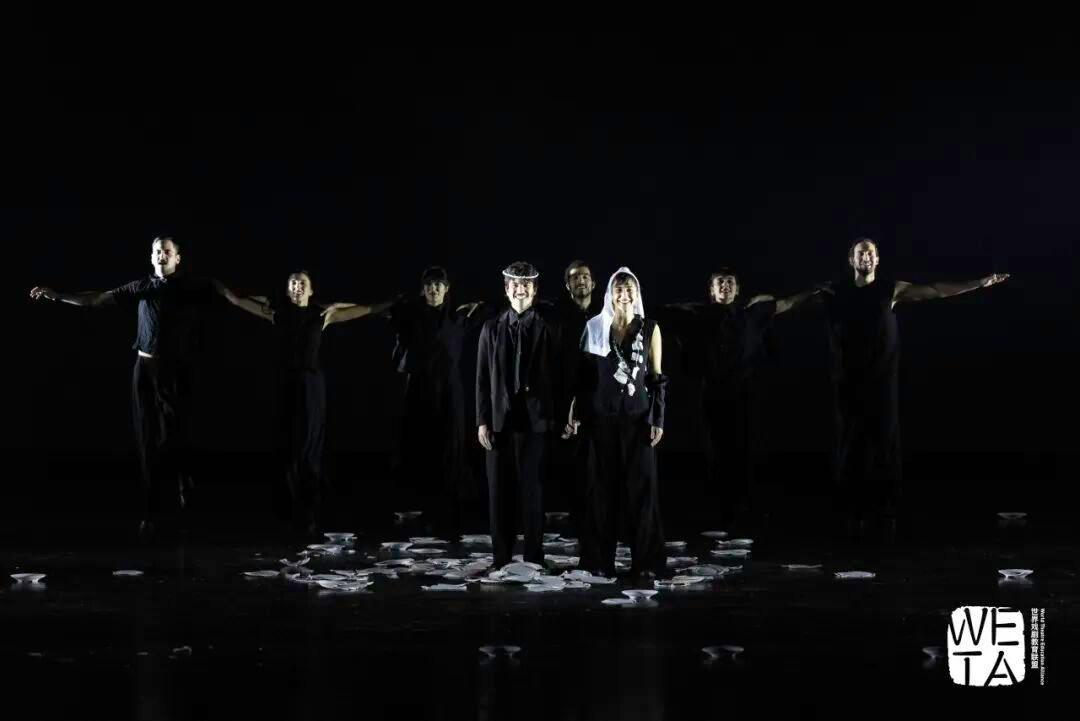
Stage Stills
In confronting this classic tragedy, the Athens Conservatoire Drama School went beyond traditional scripts and character archetypes, opting instead for a contemporary adaptation developed through collective devising. Over eight months of rehearsals, the creative team built the play's dramaturgy upon their own questions and modern experiences, drawing on physical training, personal narratives, literary theory, and philosophical inquiry. While following the core narrative of the myth, the production uses a variety of theatrical styles to transport the audience across different dimensions of time and space. The story is refracted through eight distinct spaces: Timeless/Ritual, Personal, Traditional/National, Real, Mythical, Transgression, Philosophic, and Present Spaces. As these stories of love flash across the stage like scattered constellations, a universal poetics of love is tenderly composed.
The play opens in the Timeless/Ritual Space with a heated debate on the nature of love between a singer who extols romance and a scientist who examines love through neurotransmitters. This immediately poses the play's central question. The mood shifts to the cheerful tunes of cabaret, as Orpheus appears as a migrant singer in a Düsseldorf tavern where he meets Eurydice, a Greek waitress. They fall in love at first sight, their connection transcending language barriers. Next, amid celebratory Greek folk music and dance, the couple returns to their homeland for a romantic wedding. In this way, the archetypes of "Orpheus and Eurydice" flow through three different pairs of actors, transforming into ordinary individuals across history and reinterpreting the classic myth.
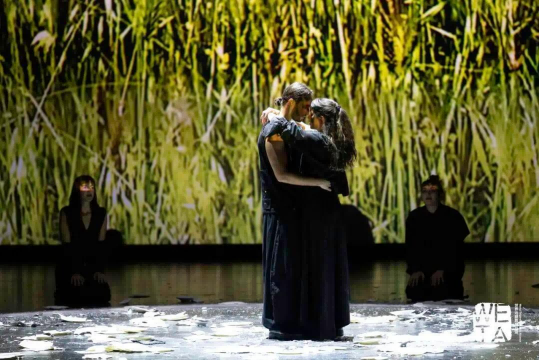
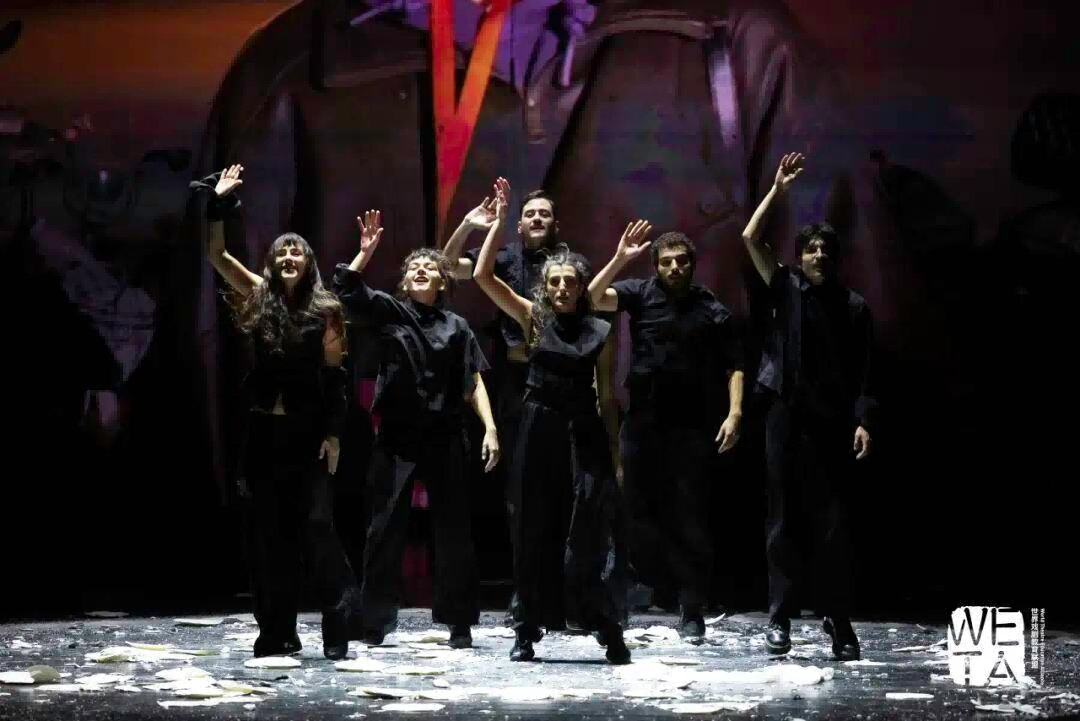
Stage Stills
Notably, after the stories conclude and the party subsides, a pair of servers begin to clear the broken plates with brooms. The cynical scientist from the Timeless/Ritual Space sits in a corner and reveals, in a melancholic tone, that he too is an "Orpheus"—a husband consumed by grief for his deceased wife. It is an ingenious twist that feels both unexpected and inevitable, sending ripples through the audience. But this sorrow is quickly swept away by youthful exuberance. After the scientist makes a comical exit, the two young servers—as if by fate—fall in love, just like countless others before them. They softly whisper those two eternal names: "Orpheus" and "Eurydice." Ultimately, it is eternal love that propels the play's narrative to its circular conclusion. Though life's joys and sorrows may be fleeting, humanity's desire and will to defy the laws of nature for love have never wavered. Love's presence in the universe is constant; its forms, identities, and perceptions may vary, but its essence remains unchanged.
The performance employs an open, multi-focal structure, where fragmented images, sounds, and actions converge to create a unified, poetic stage universe. The "plate," a central element from the promotional poster, serves as a recurring key symbol. During the post-show talk, director Giorgos Zamboulakis explained, "In Greek tradition, plates are smashed for good luck at celebrations, but they are also important artifacts in funeral rites." This cultural duality resonates perfectly with the story of Orpheus and Eurydice, organically weaving together the myth's themes of love and death. The director deliberately exploits the plate's fragility. The plates used as wedding props are shattered underfoot at Eurydice's accidental death, a metaphor for human love, which is just as beautiful and fragile, seemingly vulnerable to any cruel twist of fate. Yet in the end, the actors gather the broken pieces from the stage. It is humanity itself, full of passion, singing anthems to the courage of love amidst ruins that await rebuilding.
Music and video projections are also central to the production's artistic language, creating a polyphonic debate of styles. On one hand, cold, metallic soundscapes, the beeping of medical devices, and X-ray images of the human body announce Eurydice's death and the tragedy of love. On the other hand, the warmth of cabaret music, the joy of Greek folk festivities, and idyllic images of foxtail grass swaying in the breeze fill the audience's hearts. This stylistic tension mirrors humanity's own vacillating attitude towards love, by turns optimistic and pessimistic. The final answer, perhaps, is revealed in the play's last scene: "Present Space: Beijing 2025." As fast-paced electronic music pulses, the actors rush into the audience, dancing with them amidst roaring applause. It is a collective, contemporary celebration. The energy of love flows between everyone, creating a powerful sense of connection, and we finally return to the eternal realm of love.
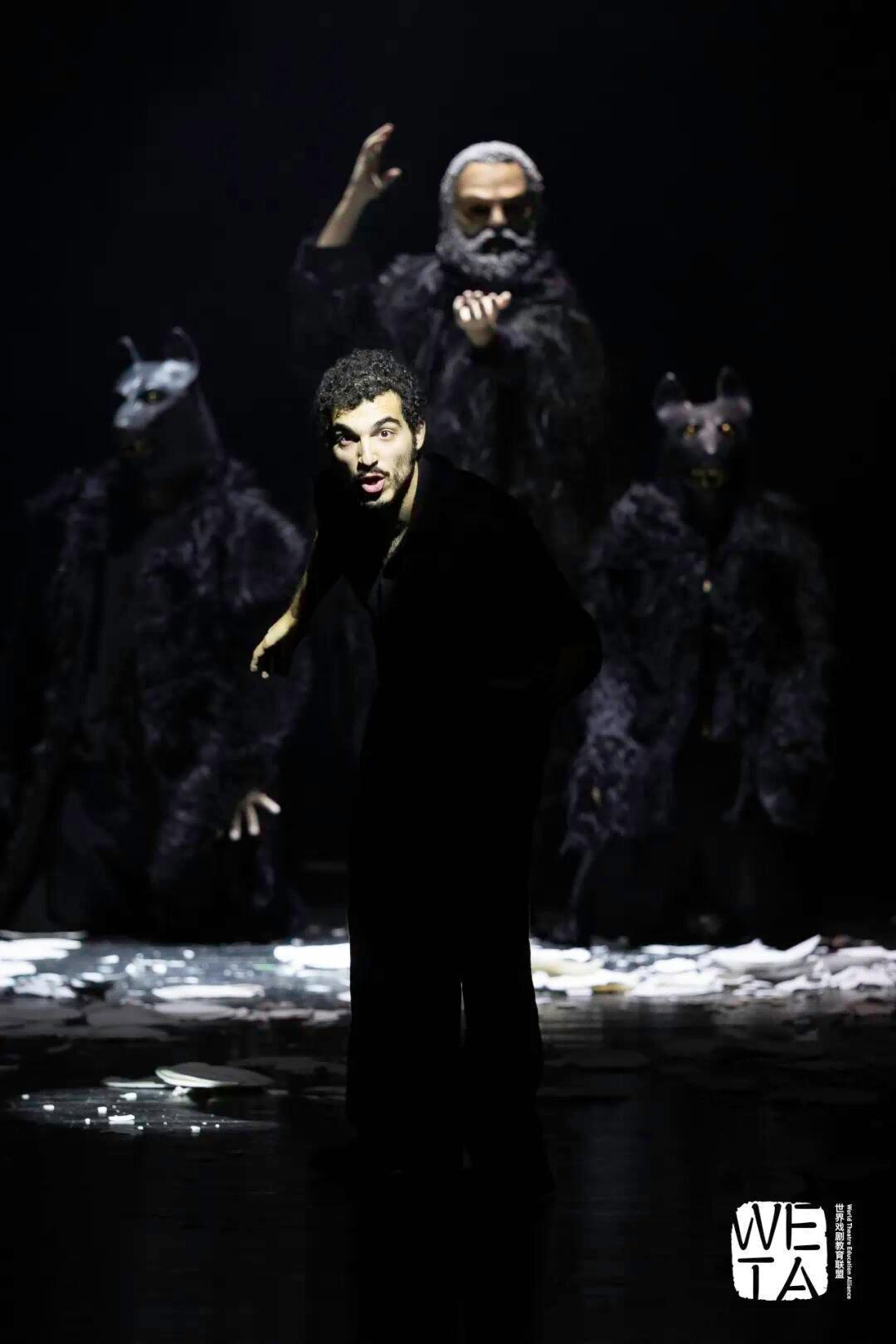
Stage Still
During the post-show talk, director Giorgos Zamboulakis twice proclaimed that "love is a weapon." In his view, love is not just the romance between Orpheus and Eurydice in a mythical space, but also a force present in every relationship throughout history, in every individual's journey toward self-love, and in every corner of our public and social lives. This philosophy of love is meant to bring warmth to our times. Regardless of the complex emotions stirred by the performance, every audience member walked out into the early winter of Beijing feeling a sense of catharsis and hope, armed with a renewed conviction in the power of love.
.20251111155022.jpg)
Post-Show Talk
On October 24, Orpheus and Eurydice was staged in the Cave Theatre at the Seven Star Park in Guilin. The fusion of ancient Greek drama with the grandeur of the Karst caves created a moment of classic brilliance. The performance in the Cave Theatre prompted deep reflection from the audience: What is love? How should we love? In the play, a scientist attempts to explain love through biological and chemical lenses, which brought knowing smiles from the audience, who understood that love cannot be rationally examined. Romantic scenes and lines like, "So that I can think of my life anew; so that I can think of it differently" "And now, now, here, I love you, and till the end, you will be here, responding to me", and "I love you freely, I love you purely, in my old sorrows..." moved everyone present deeply.
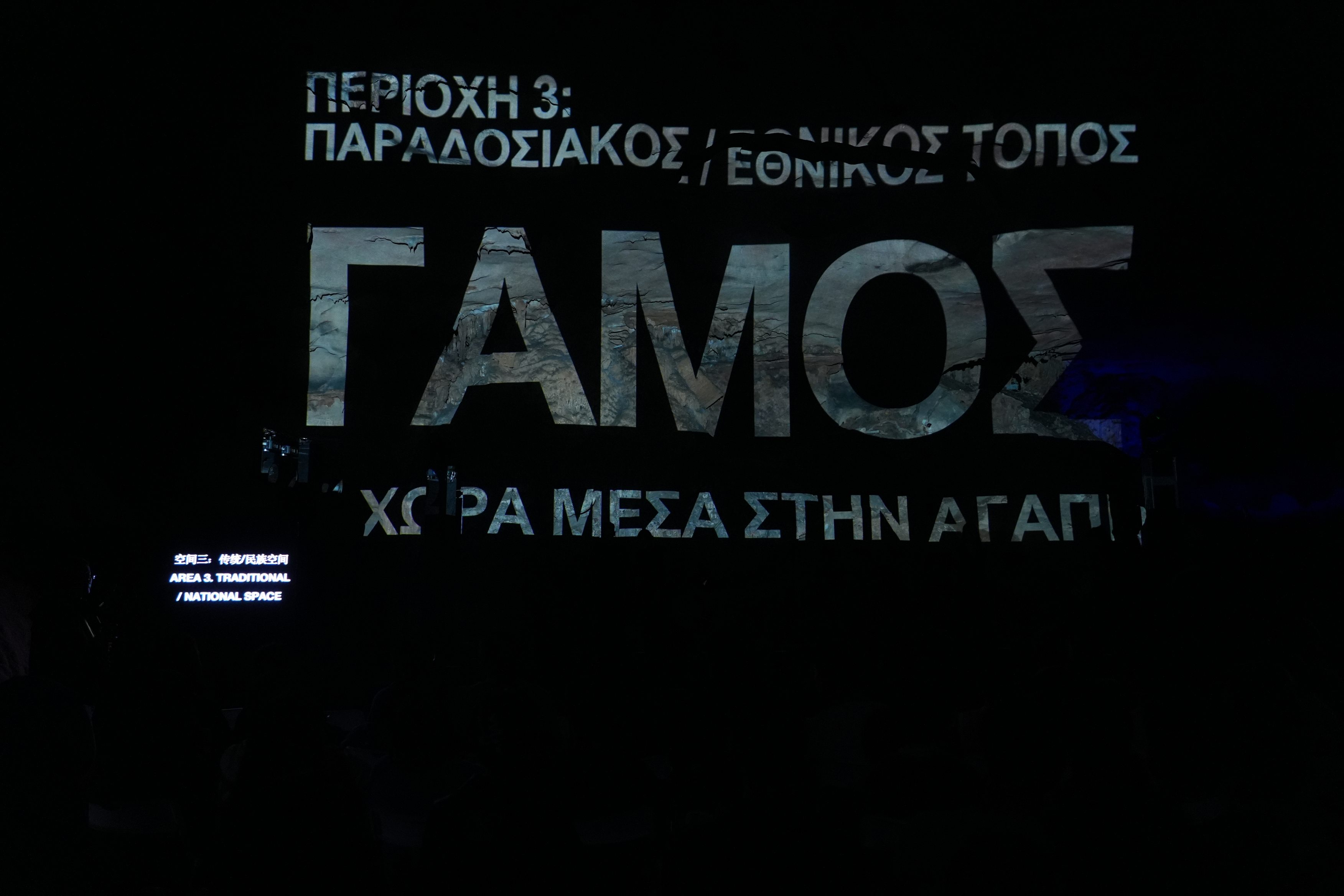
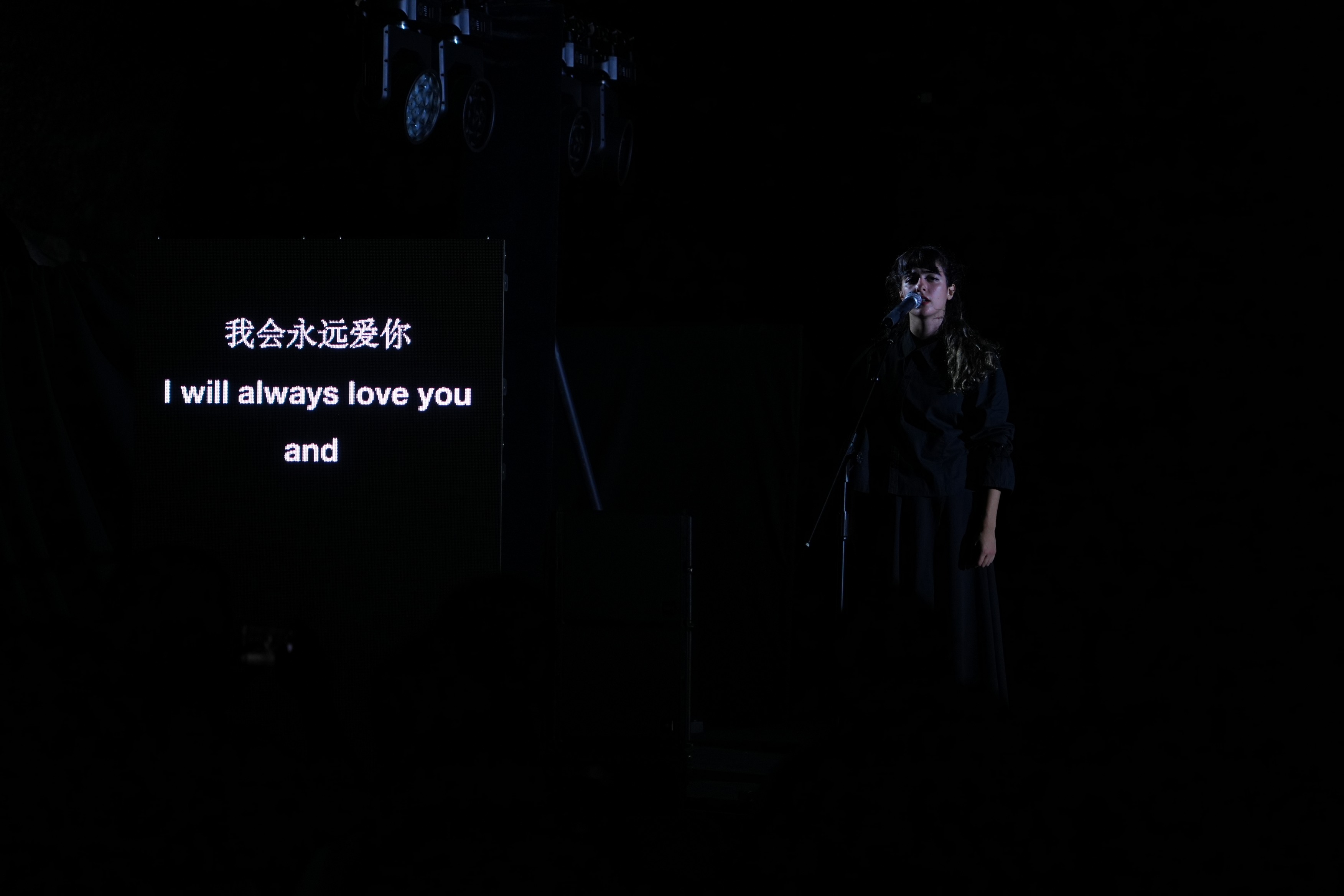
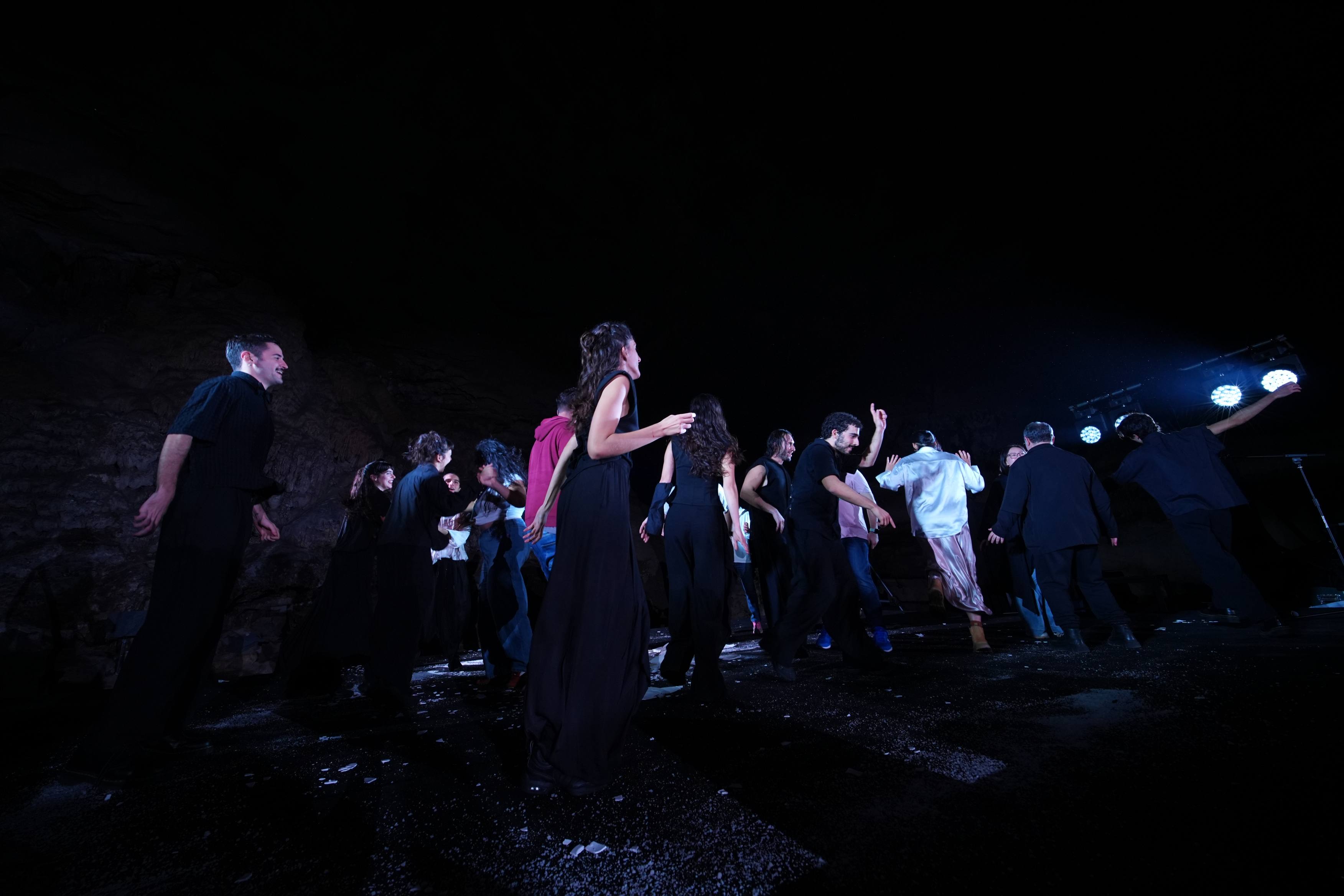
Stage Stills in Guilin
06 With Love's Light Wings
By Shota Rustaveli Theater and Film Georgia State University, Georgia
On October 22, two actors from Shota Rustaveli Theater and Film Georgia State University delivered a pair of memorable performances at the Thrust Stage Theatre of the Central Academy of Drama's Changping Campus. Their play, With Love's Light Wings, is an adaptation of William Shakespeare's Romeo and Juliet. For this most renowned one among Shakespeare's love tragedies, the creative team aimed to express a distinctly modern perception of love, using it as a gateway to explore the story's classical core and create a dialogue between the two perspectives.

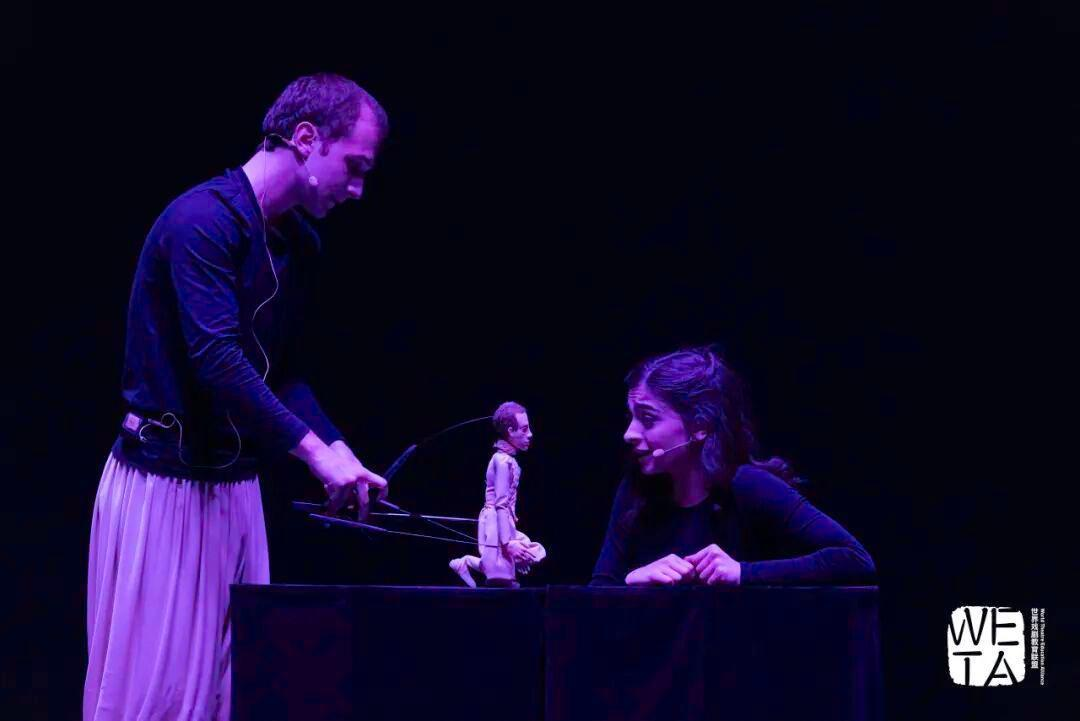
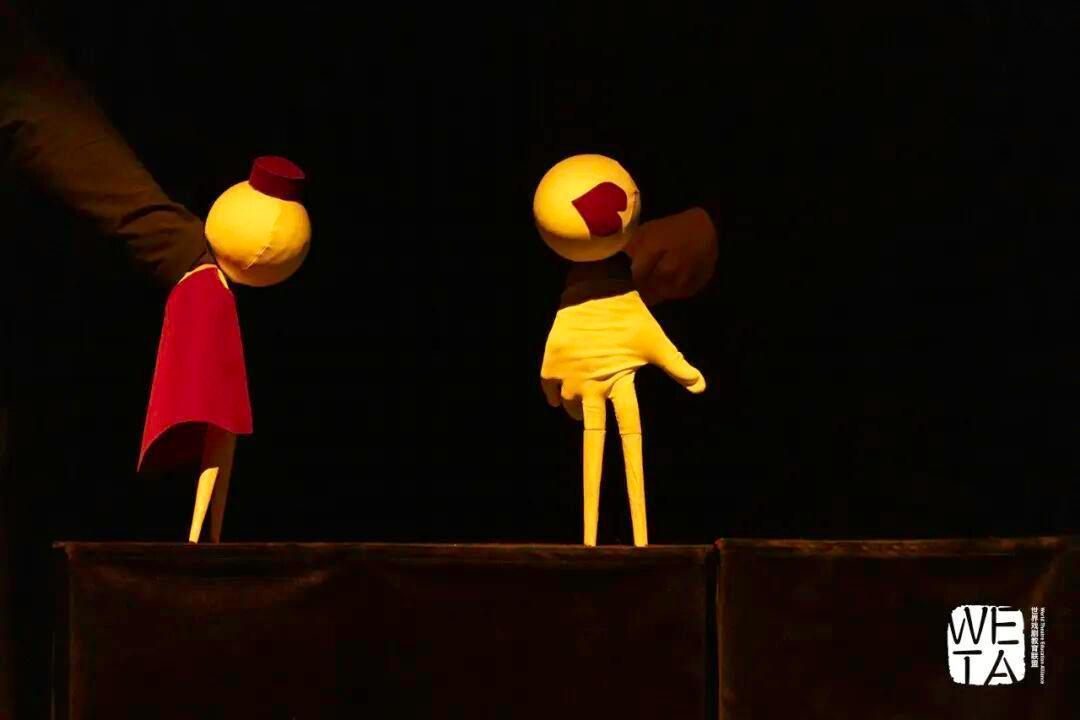
Stage Stills
With the festival's theme being "Love" or "Dream," Romeo and Juliet is an unavoidable touchstone. Shakespeare sets the young lovers' romance against the backdrop of a brutal family feud, lending the archetypal love story the gravitas of a classical family saga. This weightiness heightens the dramatic tension and shifts the play's central conflict from a simple romantic dynamic to a struggle between individual desire and collective identity. Ultimately, the lovers' tragic end serves as the catalyst that resolves the feud between their two houses.
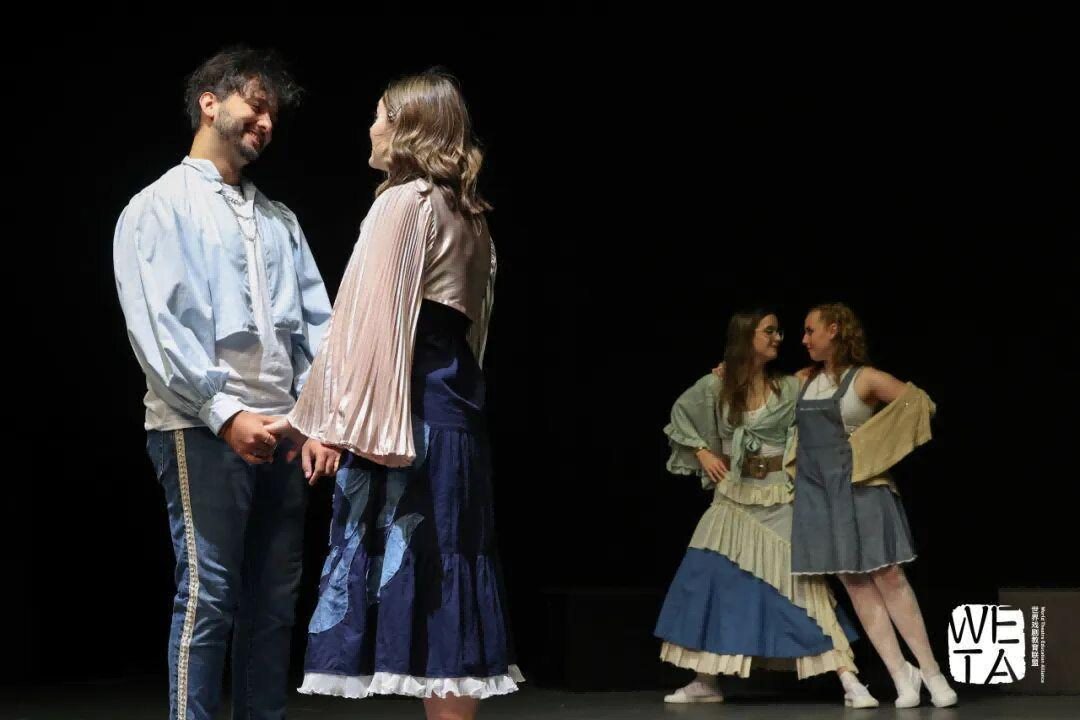
However, a contemporary creator approaching this text for a modern audience must contend with the fact that our world is far removed from that of the original play. Furthermore, the director felt that a heavy, classical staging would clash with their vision of love as something light and ethereal, like a pair of wings. Thus, the performance begins with a modern perspective on love, immediately immersing the audience in this primary theme. To sharpen the focus on Romeo and Juliet's relationship, all other characters have been excised, and the family feud is represented abstractly by two separate architectural models. A bed, symbolizing the intimacy of a modern couple, becomes an object of contention, representing the power dynamics in contemporary romance. Every element is streamlined to serve the core concept of "love in a time of hate," emphasizing the relationship itself to offer a modern lens on this classic tragedy.
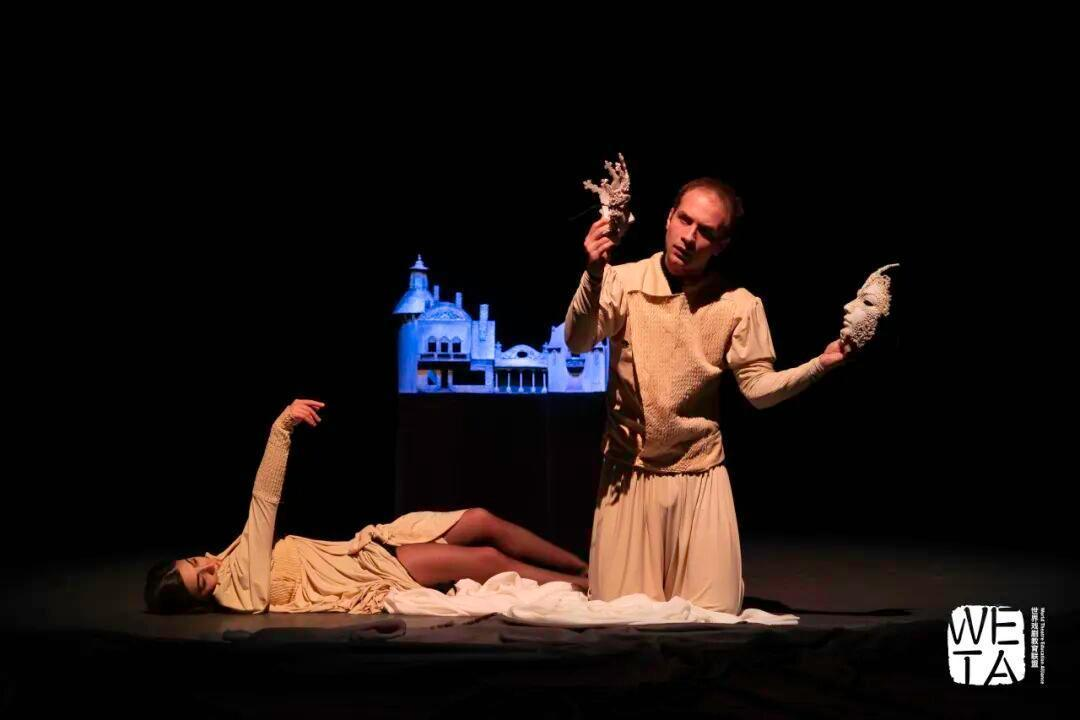
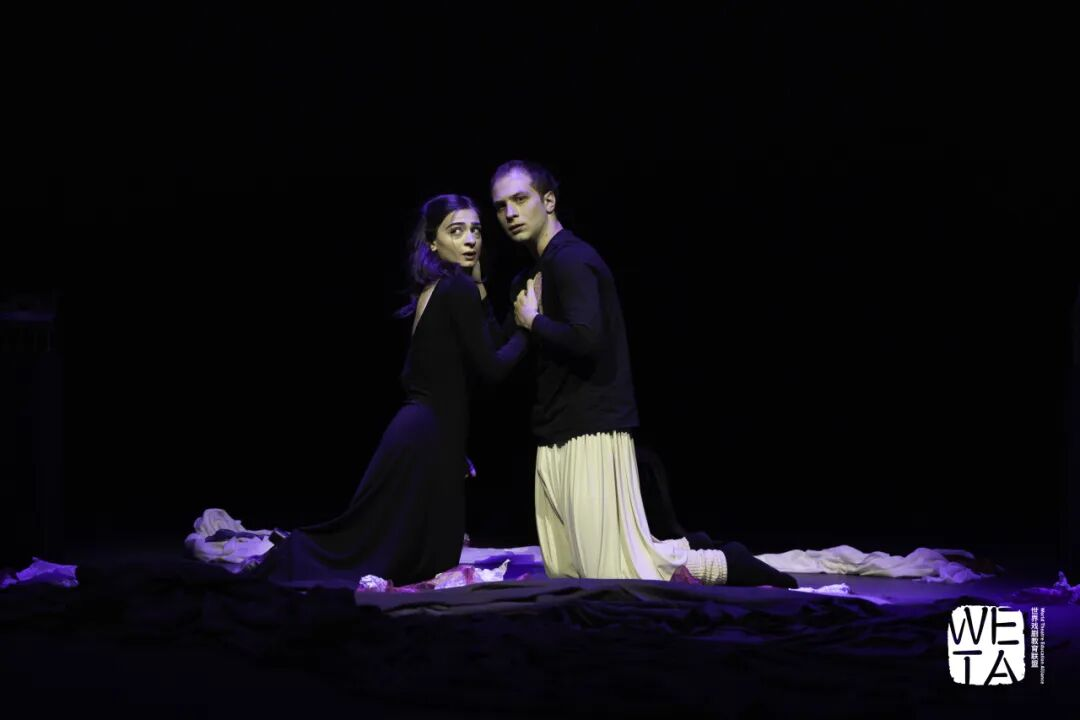
Stage Stills
This adaptation serves as a bold and innovative entry point into the text. The creative team's firm grasp of the play's essence gives the production a confident ease, as they masterfully prioritize core elements over secondary details. The production fully embraces the "what if" nature of theatre, employing multimedia, puppetry, and other techniques to not only bridge the gap between the classic text and a modern audience but also to skillfully dissolve the original's heavy tone. The iconic, large-scale brawls of the source material are playfully rendered as two architectural models flinging paper balls at each other. A particularly ingenious touch is used to portray the lovers' bond: the models on opposite sides of the stage symbolize the feuding families. Above them, two clouds (represented by actors' gloved hands) appear. They drift toward each other, eventually meeting and merging above the houses, at which point they produce a flash of lightning. This sequence offers a unique interpretation of love while also strongly foreshadowing Romeo and Juliet's tragic fate, and it reveals the director's personal vision of love's delicate nature.
In the play's final moments, a bedsheet becomes the subtle representation of Romeo and Juliet's deaths. Here, the director faithfully recreates the tragic misunderstanding from Shakespeare's text: Romeo, believing Juliet to be truly dead, drinks poison; Juliet awakens to find him gone and follows him in death. In this scene, the classical tragic atmosphere of the original is powerfully restored. But, are they really dead? The two beating hearts projected on the sheet might suggest otherwise...

Stage Still
With Love's Light Wings is a bold and novel experiment. Through a variety of modern techniques and a unique contemporary perspective, the creative team succeeded in faithfully restoring the play's core theme of "love in a time of hate." The production earned the audience's acclaim.
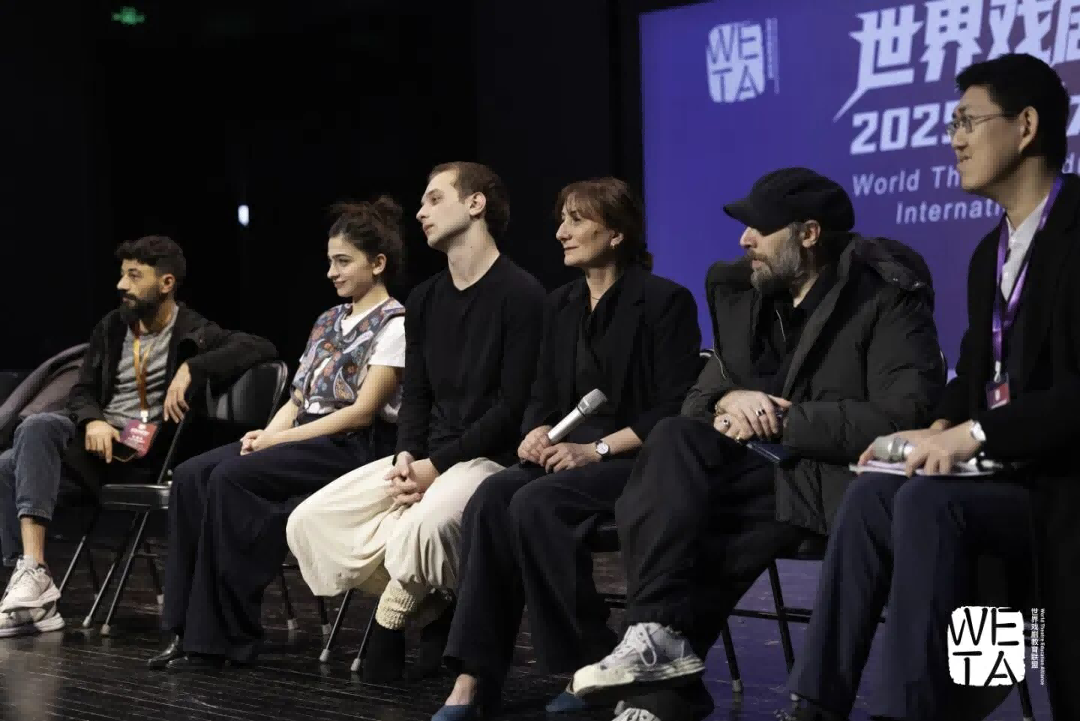
Post-Show Talk
On the evening of October 26, the classic and poignant love story With Love's Light Wings was staged in the Cave Theatre at Guilin's Seven Star Park. This adaptation of the classic work boldly eliminated all other characters, allowing the two protagonists to carry the entire story while infusing the classic romance with numerous modern elements. The use of puppets, architectural models, and bedsheets to interpret the plot's direction offered a fresh visual experience. "Great love stories can transcend time to become classics, and people still believe in true love."
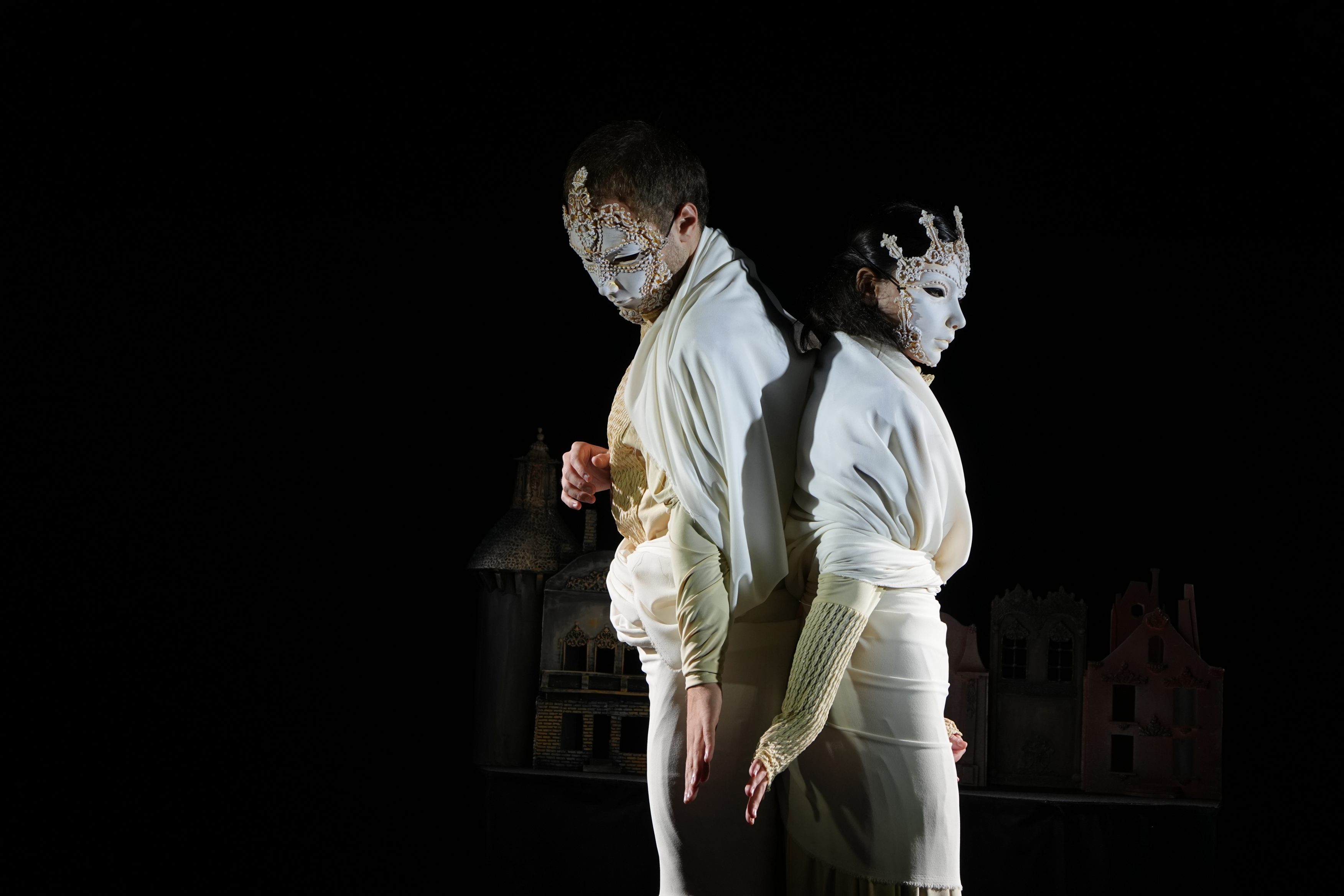


Stage Stills in Guilin